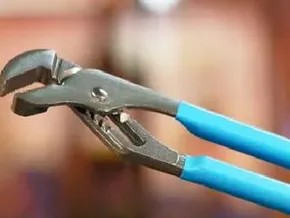
Channellock pliers is more than just a name. These are the absolute standard for gripping tools in the home workshop. Named after the Pennsylvania manufacturer who popularized this design, these tools are made with one purpose in mind: to hold tight. Made from high carbon steel, they offer durability not found in standard needle nose pliers. The secret is the adjustable sliding jaw. You can set the width and fit anything from small nuts to thick pipes.
This design creates a mechanical advantage that converts moderate hand force into powerful torque. That’s why firefighters like to force entry and why plumbers always keep a pair in their trucks. However, it is important to know how to use them correctly. Improper use can damage the tool or cause injury.
Why They Work for Home Repairs
The versatility of this tool comes from its structure. The jaws have undercut grooves and tongues. It’s not just for show. It bites objects and prevents them from sliding when applied with force. Most models have a protective grip on the handle to keep you comfortable during long working hours. Some have insulated handles to prevent shock, but you should always check the voltage before working on live circuits.
The length of the pliers provides leverage. You don’t have to work hard to tighten bolts or pull cables. Whether it’s fixing outdoor furniture or fixing a leaky faucet, this tool can adapt to your task. It has the functions of pliers, wrench and clamp in one.
Suitable for DIY projects.
For the average homeowner, Channellock pliers are a backup tool when all else fails. They do a great job with the plumbing. Is there a tough nut stuck in the pipe? These are easy to handle. Do the wires have to be held while soldering? They keep things stable. Adjustable jaws allow you to change from 1/2″ fittings to 3/4″ valves without additional tools.
Emergency workers trust them because they are powerful. These pliers provide the grip and power you need when breaking into a car or prying open a stuck door. It can also be used as an improvised wrench in an emergency. This makes it a must-have item in your emergency kit.
What not to do with Channellock pliers
Although these pliers are strong, they are not indestructible. They are not cutters. Do not attempt to cut wire. Since the jaws are not sharpened for this purpose, the tension can damage the head or cause the locking mechanism to fail unexpectedly.
Vibration is also your enemy. Do not use it for work that causes strong vibration or impact. When pressure is applied, the lock can open and release what it holds.
Never use it as a hammer. If it is made of steel, it may crack or break. Although some handles are insulated, do not hold onto the handle when using the soldering gun. Heat is transferred through the metal. Protective handles may not protect against extreme heat or high voltage currents. Always assume the tool is part of the circuit unless you prove otherwise.
Choose the appropriate size
This tool is available in various lengths, typically 8 to 14 inches. Longer pliers provide more leverage but less precision. Short ones are suitable for small spaces. For general household use,