They don’t eat you.
They eat your house.
Technically, they hollow it out. To live there. To make their families comfortable while your structural integrity crumbles into dust. Ed Dolshun knows this pain. He runs the technical side at Catchmaster, so he spends his day watching people ignore the warnings until their baseboards disintegrate.
Here is what happens when you let them stay. And how to kick them out before they cost you thousands.
The Damage Isn’t Food
“Carpenter ants can cause significant structuraldamage to your home through costlywood destruction” — Ed Dolshun
They are not termites. That distinction matters.
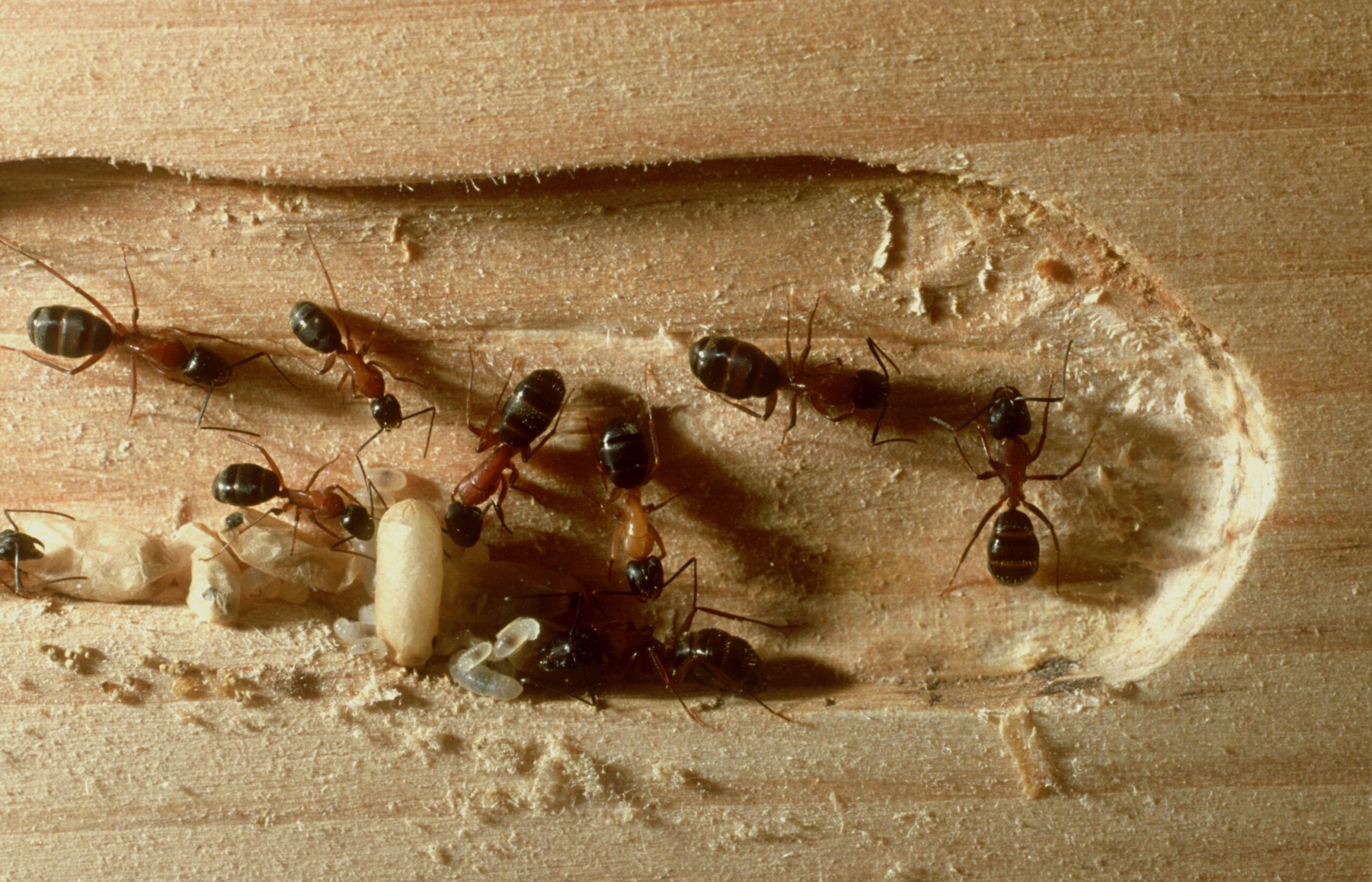
Termites chew the cellulose. Carpenter ants just dig. They carve galleries into studs. Framing. The hidden bones of your home.
Dolshun says the damage adds up. Fast. If you see one, you aren’t just looking at a bug problem. You’re looking at a repair bill that keeps growing while you wait to decide what to do.
Vigilance helps. But mostly? Just get them out. Now.
Five Signs They’re Already Inside
Night Crawlers
You won’t see them at noon.
Carpenter ants work the graveyard shift. If you’re wandering around your kitchen at 10 PM and see a line of black insects marching with purpose? That’s them.
They’re bigger than the tiny stuff you squish under your door seal. Think half an inch. Roughly the size of your thumbnail nail. Their heads look heart-shaped. The thorax? Smooth.
The Wood Confetti
You find the poop.
Or rather, the debris. Dolshun calls it frass. It looks like sawdust. Like someone ran a planer along your doorframe and forgot to vacuum.
Check your window sills. The fireplace. Under the cabinets. If you see piles of sawdust and dead ants together, you’re not imagining things. The ants are excavating their home. Leaving the trash behind for you to trip over.
Also check outside. Dead trees? Stumps? If the ants have tunnels in the timber in your yard, they’ll treat your porch like an annex.
Wings Are Bad
You see an ant. It has wings.
Run.
Not really. But investigate immediately.
Winged ants are reproductive swarmers. They’re leaving the nest to start a new colony somewhere else. Often? Somewhere closer to you.
They are larger. Brown, black, or reddish. About five-eighths of an inch. Here is how you tell them apart from termites, which also have wings but look totally different: carpenter ants have bent antennae. Their front wings are huge compared to the tiny rear pair.
Termites have straight antennae and four equal-sized wings.
So which are in your hallway?
If they’re bent-antennae giants with mismatched wings, you have carpenter ants.
Noises in the Walls
Quiet nights become noisy ones.
Listen closely. When the house settles, hear a scratch? A light crackle?
It’s not pipes.
It’s the colony gnawing. They move between framing and insulation. If the sound stops when you thump the wall, that’s a classic sign. The vibration scares them.
Damp Wood Calls Them
Moisture attracts them like a beacon.
Rotting wood is soft. Easy to carve. If your roof leaked last winter and the siding warped, the wood behind it is likely spongey.
This invites them in. Or maybe you had water damage, the ants moved into the moist timber, and now the wood is decaying faster because of them. It’s a feedback loop.
Sometimes the ants aren’t the problem. They’re just the symptom. A leak. A ventilation failure. Fix the bugs, and you still might have a house that needs drying out.
How to Get Them Out
Can you DIY it?
Maybe. If you catch them early. Dolshun suggests finding the trail. Placing carpenter ant bait right on the line. The poison moves slow. Workers carry it home. It kills the queen eventually.
Seal cracks in windows. Foundations. Doors.
But be honest with yourself.
These pests are tricky. They nest inside walls you can’t see. DIY often fails because you treat the symptom, not the source. If you know they are in the walls, you don’t have time for guesswork.
Call an exterminator.
“Noticing any number ofwinged ants isanother huge red flag” — Ed Dolshun
They have tools you don’t. Knowledge you probably lack. And the willpower to drill holes in your baseboards so the poison gets where it needs to go.
The last thing you want is a DIY solution that lasts three weeks before they return. More aggressive. More entrenched.
So look for the frass. Listen to the walls. Then pay the pro before your floor joists decide they want to become sawdust.