


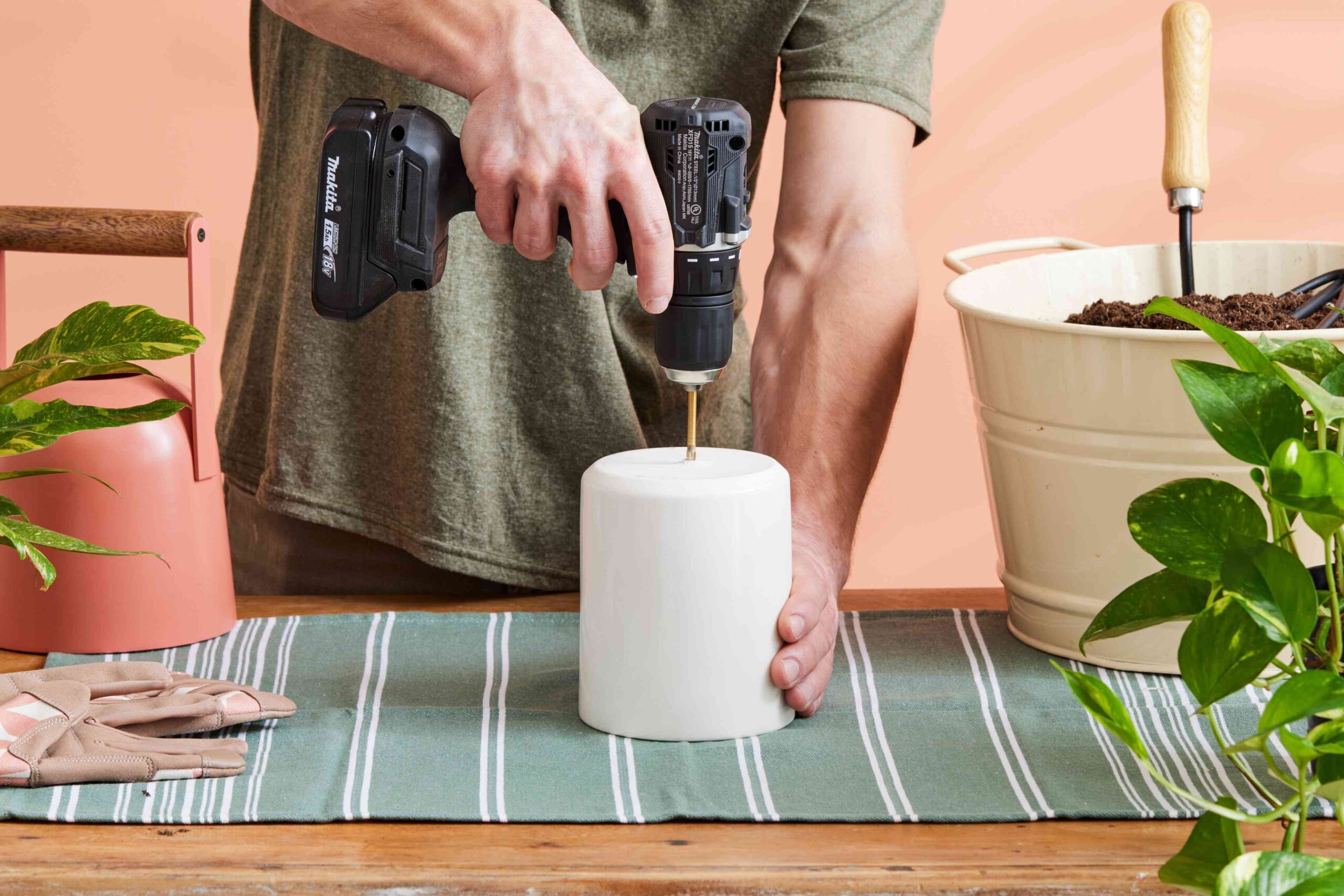
Drilling a ceramic pot takes about five minutes. Maybe ten. You’re a beginner. That’s fine. It costs you less than a takeaway lunch—seven to ten dollars if you shop right.
Why bother? Water. Roots hate drowning. Ceramic is gorgeous, yes. Heavy. Rigid. Beautifully stagnant. A hole fixes that. Your plants will thank you. They’ll flourish, actually, instead of slowly suffocating in soggy dirt.
A hole is simple. It is also effective.
Keep it Together
Ceramic is fragile. It wants to crack. You want to drill, not shatter your latest purchase. Hold the pot firm. Slippery rims are enemies. Put a towel on your table first. This keeps the pot steady and the bottom from rattling around while the bit bites in.
Wear goggles. Dust is terrible. Ceramic dust gets everywhere, and your eyes? They shouldn’t see it. It stings. It blurs. Skip the eye protection, and you’ll end up with a gritty vision of failure.
Pick the Right Tooth
What’s in the box matters. Regular drill bits work on glass or tile. They’ll do fine on unglazed ceramic only. Glaze is glass-like; standard metal bits skate off it or shatter the surface.
Masonry bits? They’re for concrete. Hard stuff. Still, they fail on glaze. Use them on raw, unglazed clay only.
The answer is diamond drill bits. Expensive? Slightly. Universal? Yes. They cut through the hard, slippery glaze without hesitation. They handle rough terracotta too. If you buy one bit, buy diamond. It’s the only way to avoid frustration.
You don’t even need a drill. Sharp objects work too. A knife tip, a nail. Tap it. Slowly. Painstakingly. It’s slower than drilling, but it costs nothing. Patience is the real tool here.
So. You have the bit. The towel. The glasses.
Start drilling. Or don’t.


