


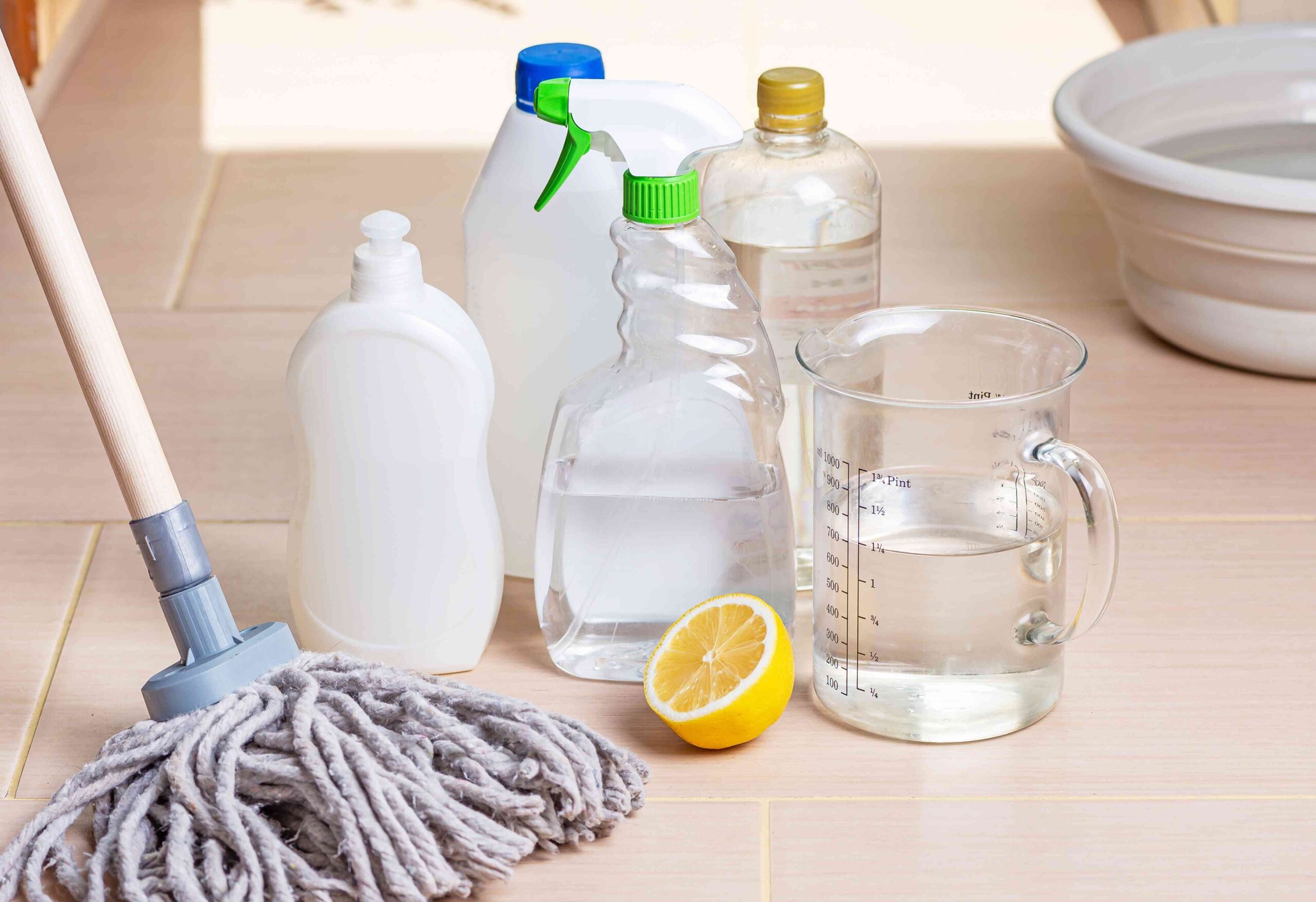
Forget the marketing blurbs. You don’t need another plastic bottle.
Mopping solutions are easier than you think. Cheap too.
We’re talking pennies on the dollar here. Skip the aisle. Raid your kitchen.
Homemade cleaners actually work. They’re safer, sure, but also just effective. Use them weekly on the paths where feet walk the most. Maybe every other week for the rest. Your floors stay shiny. The harsh chemicals? They stay off them.
A Warning Before You Pour
Water is the enemy.
Or, more specifically, too much water is.
Wood floors hate it. Laminate fears it. If you saturate a natural wood floor lacking a decent polyurethane seal, you’re going to stain it. It happens fast. Water finds seams in laminate and sneaks in. Manufacturers warn about it. Listen to them.
Keep the mop damp. Not dripping. Ever.
While most floors tolerate a light mist, never let water pool. One wet spot can become one permanent damage spot.
The Acid Test: Vinegar
White vinegar. It’s pungent. It fades.
It’s great for tile. Good for linoleum. Check your grout first—make sure it’s sealed. If it isn’t, hold up. Vinegar eats through unsealed stone like butter. Don’t use it on waxed floors either. It’ll make them cloudy. Hardwood? Only sparingly. If at all.
Here’s the math for a gallon batch.
Mix 1/2 cup distilled white vinegar with 1 gallon of warm water.
Done. Simple.
Want extra grit? Add 2 tablespoons of mild dish soap. That cuts the grease.
Hate the smell? Fine. Throw in some lemon juice. Or drop a few scented oils. Your nose will thank you, though the vinegar scent usually vanishes within minutes anyway.
Shine Bright: Window Cleaner
Window cleaner. Not just for windows.
It’s perfect for vinyl, tile, and sealed laminate. Leaves zero streaks. Just shine.
Spray it straight from the bottle onto stubborn spots. Use a wet mop to pull the dirt off. Easy.
Need more volume for a whole room? Dilute it.
- For vinyl and tile : Mix equal parts window cleaner and warm water.
- For laminate : Be stingier. Try 1/4 cup window cleaner for every 1/2 gallon water. Less is more here.
Soapy Business: Dish Soap
Dish soap gets it done. Most floors tolerate it fine.
But don’t drown them.
Too much soap creates a film. You know the look. It gets sticky underfoot. It attracts dust. A nightmare to fix later.
Stick to small doses.
Mix 1/4 cup mild dish soap into 3 cups warm water. That’s it.
If you want to combine forces? Try 1/4 cup soap, 2 cups white vinegar, 2 cups warm water, and 1/2 cup lemon juice. Sounds chaotic? Works great.
The Fast Drier: Rubbing Alcohol
Laminate hates slow drying. Streaks appear as water evaporates.
Enter rubbing alcohol. It evaporates instantly.
This keeps floors dry. Quick. No lines left behind.
You’ve got two routes.
One: 1 cup rubbing alcohol to 1 gallon warm water.
Two: The triple threat. 1 part vinegar, 1 part rubbing alcohol, 1 part warm water. Equal shares. Mix them up. Wipe down. It dries before you can even finish the room.
Two Quick Questions
What about Dawn and vinegar on hardwood?
The debate is loud. Vinegar can dull wood finishes over time. If you’re nervous, keep the vinegar rare. Or just skip it entirely. A few drops of gentle dish detergent in a bucket? Better. Damp mop. Then dry mop to buff it. Don’t guess. Test first.
Two buckets or one?
Two. Always two. One holds the dirty cleaner. One holds the rinse. If you dip a muddy mop into clean solution, you just ruined it. You’re just smearing dirt around now. Rinse it. Keep the clean side clean.
Dry it with air? Or with a towel?
Wipe it down. Air drying leaves spots. Streaks. Use a dry mop or a towel. You want dry floors. Not spotted ones.
There it is. Cheap. Effective. Yours to tweak.
Just remember—wood doesn’t like baths. Treat it right and it stays nice.


