Before you light the igniter, you need to consider what might be on your skin or in your lungs.
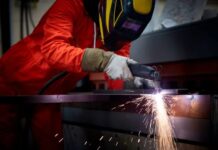
Goggles. Always. Not just safety glasses. The flame is very bright and requires tinted lenses or a full face mask. Add thick gloves and an apron. If you can afford it, invest in fire-retardant clothing and hard-toed shoes. The goal here is simple. If something goes wrong, you want the damage to be annoying, not life-changing.
Ventilation is non-negotiable. If you feel that the air feels stale, stop. Keep a fire extinguisher within easy reach. Check the lines for leaks before lighting the torch. And for the love of common sense, don’t wear clothes with oil stains on them. You are mixing fuel with heat. This is a bad idea.
Even if you use the proper equipment, accidents can still happen. When you know what kind of accidents happen, you can react correctly.
Backfire vs. Flashback
There are two main reasons why blowtorch fail. They sound the same but require different responses.
A flashback is loud. It pops. The flame dies out instantly. This usually happens if the gas pressure is too low or if the torch tip accidentally touches the workpiece. It’s startling. You might jump. But it won’t hurt you. It’s basically a throat clearing torch.
Flashback is different. In this case, the flame retreats into the torch. This is due to incorrect pressure or a blocked nozzle. This is very dangerous. The fire spread backwards towards the gas source.
If you suspect a flashback, do not tamper with the nozzle. Shut off both gas cylinders immediately. Cut off the fuel supply. Allow the torch to cool. Don’t try to fix it while it’s still hot and pressurized.
Sparks are a danger sign
Sparks can look cool. They flicker and dance. But if you see them sputtering far from your work area, that’s not art. That’s a problem.
Excessive sparking usually means too high gas pressure. Or there is a risk of fire. The flame isn’t just heating the metal; It becomes unstable. Dial it back. Adjust the mixture. If sparks are still flying, stop working. You’re asking for joint burns or structural defects.
Why does metal deform during welding?
You may wonder why straight metal pipes look like bent pretzels after welding. It’s not bad technique. This is physics.
The atoms of solid metals are not stationary. They vibrate. Constantly. When heated, they vibrate more intensely. The repulsion between atoms is stronger than the attraction. They push each other away. The metal expands in volume.
This is called thermal expansion.
You’ve seen this effect but didn’t realize it. Have you ever used a jar lid under hot water? The metal expanded slightly and the seal broke. Easy to open.
In welding, this expansion can cause warping. If you heat only one side of a piece of metal, that side will expand, but the other side will remain cold. The result? Misshapen, warped metal.
Welders know this. Try to heat the entire part evenly before starting. This will take more time. More precision is needed.