You might think that a regular grill box is enough. Most manufacturers disagree. They want you to spend more money. The goal is simple. Give you more ways to cook.
Let’s consider thermal geometry. It goes down when you move away from the fire. Multi-level grills take advantage of this physics phenomenon. Add a second or third surface above the main grid. The upper rack is not suitable for grilling steaks. The temperature is too low. Use it to steam vegetables. Or keep cooked meat warm without drying out.
Need to make a sauce? Do not burn your hands near open flames. Find the side burner. Connect the gas grill hose to the small burner on the side. Holds pots and pans. Avoid cooking the sauce over direct heat.
Rotisseries are another option. A long metal rod hangs horizontally above the fuel source. Spins slowly with an electric motor. Suitable for slow roasted chicken. Or root vegetables. Turn to ensure even cooking. No more burning on one side and rawness on the other.
Indoor and high-tech grills
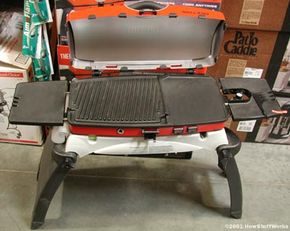
Charcoal and natural gas dominate the market. But they are not the only options. Electric grills are common. The heating element is embedded in or under the hob. The drip tray collects the grease.
It’s portable. Most of it fits on the table. Or the kitchen counter. This is important. Can also be used indoors. Cannot be used on gas or charcoal grills. Safety regulations often prohibit the use of internal combustion engines. Electrical devices do not have this limitation.
Infrared grills are becoming increasingly popular in the high-end market. We use a special ceramic plate burner. Radiates infrared heat. TEC (Thermal Engineering Company) says this method does not dry out the meat. It can produce temperatures up to 1650 F / 899 C. This is hotter than other types of grills.
The heat transfer is different. Cooks faster. It sears better. The skin cooks without overcooking the inside.
Which upgrade is right for your kitchen?
Deciding between upgrades depends on your space. and your cooking habits.
If you like complex sauces, skip the side burner. Stick to a side table. However, if counter space is limited, the side burner can save steps.
Multi-level grills also save space. Cook on two levels. But cleaning is more difficult. You get more surface. More grease traps.
Rotisserie grills take up storage space. The engine is big. The spit is very long. Do you roast chicken often? If so, buy it. If not, keep it.
Infrared grills are expensive. The technology is complex. Ceramic plates can crack. They are sensitive to shock. However, the heat output is unparalleled. Grill your steak in seconds.
Electric grills are the easiest to store. They fold down. Plug into a standard outlet. But they don’t have the taste of smoke. You can’t taste that charcoal taste. Provides clean and stable heat.
Materials and maintenance
Check the materials. Stainless steel lasts longer. It can prevent rust. Cast iron has excellent insulation properties. It seasons over time. Requires lubrication. If it gets wet, it will rust.
Aluminum is lighter. It heats up very quickly. It cools down quickly. It deforms when it heats up.
Always clean the drip tray. Grease fires start from abandoned drip pans. Remove it after each use. Wash with hot soapy water. Allow to dry completely.
Store your rotisserie spit in a dry place. Lubricate the metal. Prevents rust. Rust debris gets into the food. It’s not tasty.
Infrared ceramic plates require maintenance. Don’t drop it. Do not use metal brushes. Ceramics may crack. Use a soft brush. Or a grill stone.
Safety first
Indoor grilling is safe if the manufacturer says so. Check the sticker. Look for UL or ETL certification. Do not modify an indoor unit for outdoor use. this