Adhesives do one thing: they hold things together. You see them everywhere. Glue. Tape. Sealant. They are the unsung heroes of everyday life. But have you ever stopped to wonder why caramel sticks to your fingers or why superglue turns rock hard?
It comes down to physics. Specifically, molecular bonds.
The strength of any adhesive depends on one metric: how much stress it takes to pull those bonds apart. If the force exceeds the bond’s limit, it breaks. Simple.
The Molecular Mechanics of Stickiness
Every substance is made of molecules. These molecules carry either a positive or negative charge. For two substances to bond, their opposing charges must attract each other in the exact right amount.
Think of hydrogen chloride (HCl). The positive hydrogen atom bonds with the negative chlorine atom. The result? A strong, neutral bond.
Adhesives rely on this principle. Most contain long chains of protein molecules. When you apply the adhesive, these chains enter the microscopic pores and spaces of the material you are sticking to. They interlock. They bond.
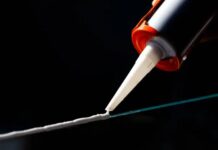
This is why surface texture matters so much. Smooth surfaces like glass don’t react well to adhesives. There are no pores. No spaces for molecules to enter. No anchor points. The glue sits on top, waiting to be wiped away.
Liquid Glue vs. Tape vs. Natural Sugars
Not all adhesives behave the same way. The difference lies in their components and how they cure.
When you add liquid to an adhesive powder or concentrate, you create glue. The liquid acts as a carrier. It spreads the molecules into the pores of the material. Then, the liquid dries.
As the liquid evaporates, the glue hardens. The molecules lock together. The bond becomes rigid.
Tape is different. It is made by mixing rubbery materials with adhesive compounds. It does not harden. It stays flexible. Because it remains pliable, its bonds are generally weaker than cured glue. You can peel it off. You can stretch it.
Natural substances like maple syrup or caramel act as adhesives too. They contain proteins that interact with specific surfaces. Your skin. Wood. Fabric. The proteins create molecular bonding through contact. That is why sticky hands are such a persistent problem in the kitchen.
Testing Bond Strength
How do engineers know if an adhesive will hold up? They test it.
Laboratories introduce stress to the bonds to see exactly when they break. They do not just pull. They use multiple methods.
- Tension: Pulling the material apart directly.
- Shear: Sliding the material to pry open the bond.
- Pressure: Applying force to only one side of the joint.
Some adhesives are so strong that the materials themselves fail before the bond does. The wood splinters. The metal stretches. The plastic tears. The glue remains intact.
“Some adhesives are so strong that the materials they’re applied to stretch or tear before the adhesive bonds break.”
Why Your DIY Project Failed
If your last repair didn’t hold, check the surface.
Was it smooth? Glass? Plastic? Porcelain?
If so, you likely lacked the necessary porous structure for molecular