


My gravel driveway is a mess.
Not the nice kind. The “loose stones rolling onto the public pavement” kind.
I have a split driveway—part tarmac, part gravel. The gravel bit is cheap. It handles the weight. It deters theft because you can’t hide a stolen car in the rocks. But it has one fatal flaw.
It moves.
Every time a car parks on it, the stones scatter. Every time I sweep the path, half the gravel ends up on the sidewalk. It is exhausting.
Then I looked at my neighbor’s driveway.
It is pristine. Even with her SUV parked directly on the stones, not a single rock has budged. I asked how she did it. She didn’t even blink.
“Gravel grids,” she said.
Now I know why mine looks like a construction zone and hers looks like a landscape catalog. The difference isn’t the gravel. It’s the containment.
The problem with loose gravel on a slope
My gravel sits on top of a basic weed membrane. Just a thin layer of felt, nothing more. If I put a heavy-duty version under there—like the cheap rolls from Amazon—it still doesn’t help. The membrane holds the dirt down, but it doesn’t hold the stones.
Combine that lack of containment with my driveway’s slight slope, and gravity becomes your enemy.
When you drive over loose gravel, it compresses. Then it shifts. It migrates. You lose the aesthetic. You lose the coverage. Eventually, you’re shoveling rocks back from the gutter every weekend. It’s a losing battle.
How gravel grids actually work
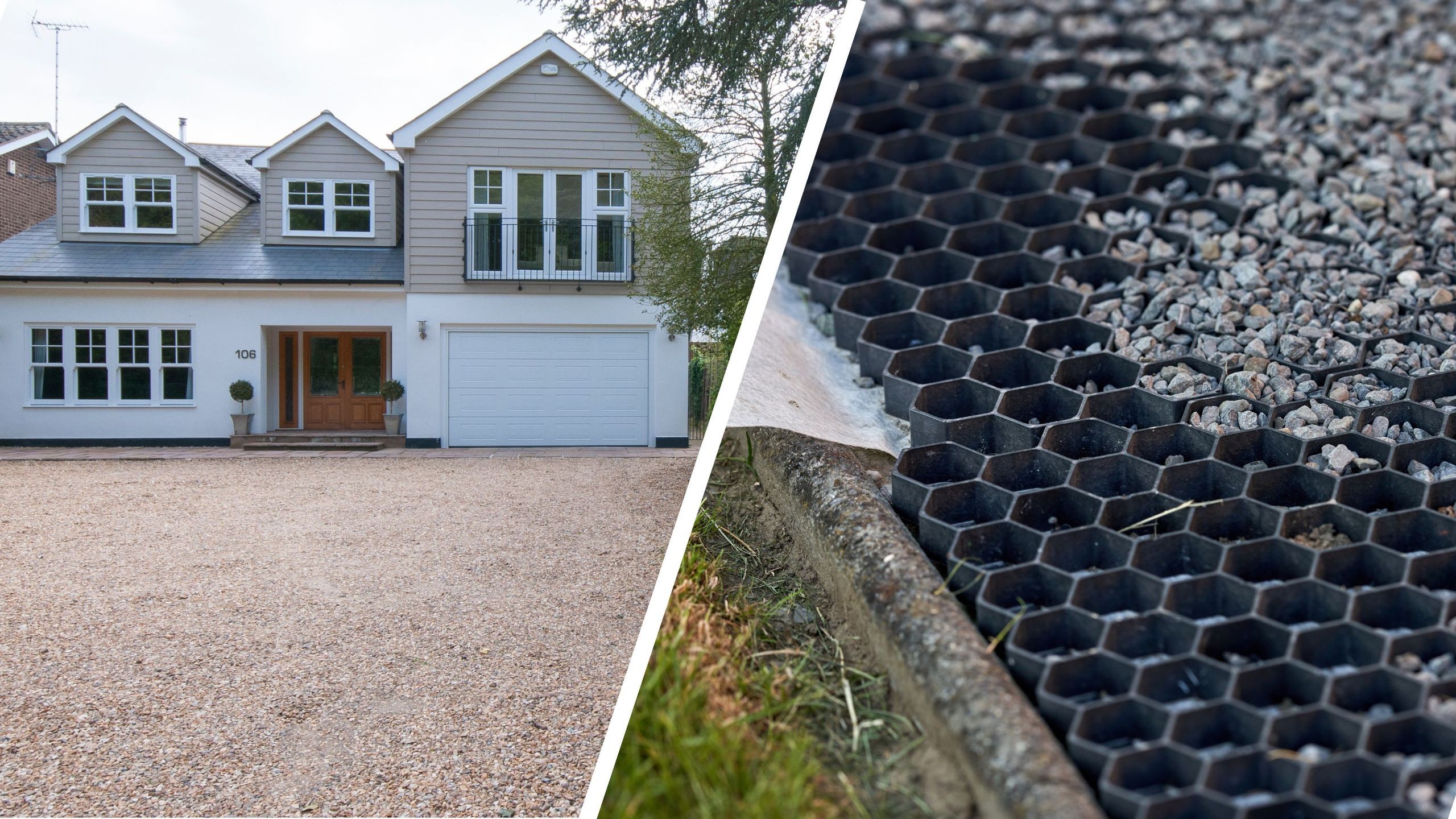
Gravel grids are rigid, interlocking structures. They look like plastic egg boxes.
That’s the best way to describe them.
You lay them flat on the ground. Then you fill the hexagonal or square cells with gravel. The stones lock into the pockets. They can’t slide. They can’t roll.
When you drive over them, the grid distributes the weight. The stones stay put.
From the street, you can’t even see the plastic. If you use the right depth of aggregate—usually around 40 to 50mm—the grid becomes invisible. It just looks like a smooth, solid bed of stones.
Strong. Tidy. Static.
Is it cheaper than resin or tarmac?
I used to look at resin-bound driveways with longing. They look incredible. Smooth. Uniform. Modern.
They also cost a fortune.
Gravel grids sit somewhere in the middle. The materials are inexpensive. The installation is labor-intensive but not technically difficult.
I’m currently torn on what to do.
Option 1: DIY
I dig up all the old, loose gravel. I level the sub-base. I lay down a proper weed membrane. Then I snap together the grids. Cut them to size if necessary. Fill them with new gravel.
If I buy the grids in bulk, the material cost is low. But my back? Not so sure.
Option 2: Professionals
Hire a driveway specialist. They know how to prepare the base correctly. They have the tools to cut the grids cleanly. They get it done in a day.
The downside? You pay for their labor. And if the base isn’t prepped right, the grids might warp over time.
Why containment matters more than material
Most people think a driveway’s success is about the surface material. Stone. Asphalt. Concrete.
They’re wrong.
Success is about stability.
Gravel grids provide structural integrity. They prevent the “migratory stone” problem that plagues almost every uncontained gravel driveway. You get the rustic look of loose gravel without the maintenance nightmare.
No sweeping the sidewalk.
No refilling bare patches after a heavy rain.
No watching your neat driveway turn into a pile of rubble within a week.
I haven’t made my decision yet. I need quotes from local contractors first. Then I’ll weigh up whether my DIY skills are up to the task.
One thing is certain.
I’m done sweeping.


