


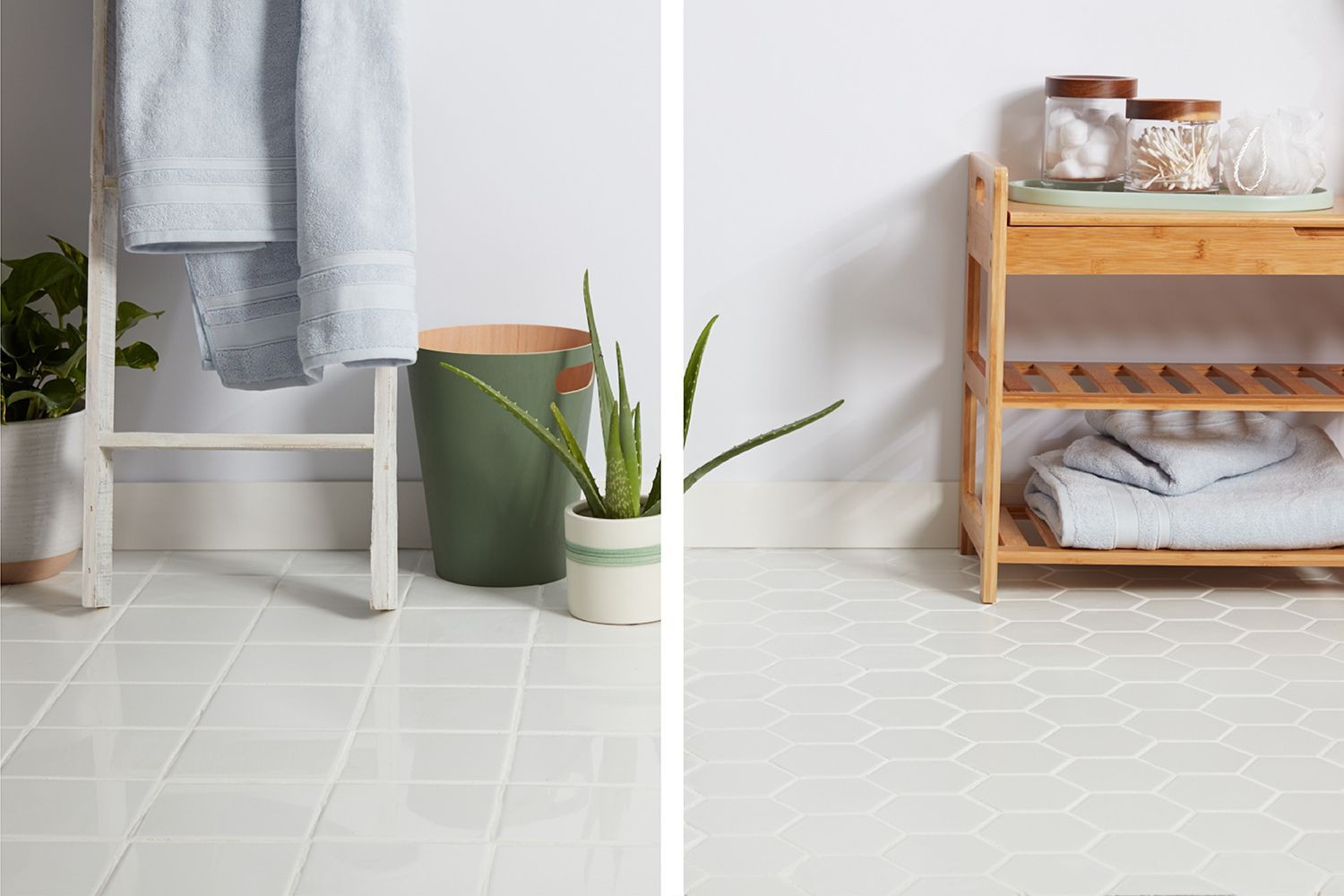
Look at a tile. Really look at it. Unless it has a weird pattern or a deep texture, your brain will trick you. It says: “Tile.” It does not scream “porcelain” or “ceramic.” You have to look at the edges. You have to check the box. You have to know what you are buying before the contractor starts laying it down.
The difference isn’t just a marketing gimmick. It changes how your floor holds up against water, weight, and winter. It changes the cost. It changes whether you need a wet saw or a hand cutter.
Let’s cut through the confusion. Here is how to tell them apart and which one belongs in your home.
Composition and Manufacturing
The core difference starts in the clay.
Porcelain tile is made from fine kaolin clay. That means the particles are small. Dense. Uniform. You fire it at temperatures ranging from 2,2PT00°F to 2,2500°F. High heat. High pressure. The result is a material that is nearly impervious to water. If it absorbs more than 0.5 percent of its weight in water, it is not technically porcelain by industry standards.
Ceramic tile is different. It uses a coarser clay mix. There is some kaolin in there, but the ratio is low. You fire it at a lower temperature—usually 1,800°F to a2,000°F. This keeps it lighter. Softer. More porous.
Here is the kicker: the glaze. Both tiles often have a glazed top. The glazed top is waterproof. Period. But look at the back of a ceramic tile. It will soak up water like a sponge. The glazed porcelain tile? Water beads right off the body because the density blocks it. The body color matters. Porcelain color goes all the way through. Ceramic color is usually just a layer on top.
“Impervious means the tile absorbs no more than an additional 0% of its weight after being boiled and soaked.”
Durability and Hardness
You want a floor that lasts? You look for density.
Porcelain is harder. It is brittle, yes. Hit it with a heavy hammer in the wrong spot, and it might chip. But chips? They are harder to spot on porcelain because the body color matches the surface. On ceramic, a chip reveals a stark contrast. Red clay showing through a white glaze? That looks bad fast.
Ceramic tile is softer. This makes it easier to cut but harder to defend. It is more prone to cracking under impact. It is less dense, which means it cannot handle the same abuse. If you have a high-traffic entryway or a kitchen where people drop cast iron pans, ceramic is asking for trouble.
Water resistance is where porcelain shines. Because it is so dense, water struggles to get in. Ceramic tile absorbs more than 0.5% of its body weight in water. That is a big gap. In a wet bathroom, ceramic might hold moisture in the body if the grout fails. Porcelain shrugs it off.
Cost Breakdown
Money always matters.
Porcelain costs more. You are paying for the refined raw materials. You are paying for the massive energy demands of firing at 2,250°F. You are paying for stringent testing standards. The PTCA Certification Mark is not free. Expect to pay between $10 and $15 per square foot for porcelain.
Ceramic tile is cheaper. You can often find it for $5 to $10 per square Foot. Sometimes it is 60 to 70% less expensive than porcelain. Why? Lower firing temps. Cheaper clay. Less energy.
But price varies wildly based on origin and design quality. A fancy Italian ceramic might cost more than a basic porcelain slab from the Midwest. Don’t assume the cheapest option is ceramic and the expensive one is always porcelain. Check the specs.
Installation Challenges
You think installation is the same? It’s not.
Both use thin-set mortar and grout. You lay them on cement board. But cutting? That’s where the frustration starts.
Porcelain is hard. It breaks wet saw blades. You need a diamond blade. You need a good wet tile saw to get clean cuts. If you try to score-and-snap porcelain with a standard handheld cutter, you might spend more time fighting the tile than finishing the room.
Ceramic is soft. It yields. A basic snap cutter works fine. A utility knife can even score it. If you are a DIYer doing a backsplash, ceramic is forgiving. It cuts easily. It fits around outlets without a battle. Porcelain requires power tools and patience.
Where to Use Them
This is the decision maker. Location dictates choice.
Outdoor Use
Can you put ceramic tile on a patio? Not really. Not in any climate with freeze-thaw cycles. Water gets into the pores, freezes, expands, and cracks the tile. Ceramic is out.
Porcelain? Yes. But with limits. Only in mild climates. If you get heavy rain and freezing temps, even porcelain can fail if water seeps into the grout and expands underneath. But generally, porcelain is the go-to for outdoor floors. It is impervious. It handles moisture. It is the only safe bet for exterior spaces where aesthetics matter.
Indoor High-Traffic Areas
Kitchens? Mudrooms? Entryways? Go with porcelain. It stands up to the grit and weight. Ceramic is softer. It wears down faster in these zones.
Walls and Low-Traffic Rooms
Ceramic is great for bathroom walls. It is lightweight. Easy to install. Perfect for a kitchen backsplash. It does not need to bear weight. It just needs to look good and repel splashes. Since the glaze is waterproof, the backside moisture issue doesn’t matter on a wall.
“Porcelain absorbs less water than ceramic, making it the superior choice for outdoor locations and high-traffic indoor zones.”
Cleaning and Maintenance
Here is the good news. Maintenance is almost identical for both.
Sweep or vacuum once or twice a week. Grit is the enemy. Grit acts like sandpaper. It dulls the glaze.
Damp mop every two weeks. Use a mild soap and water solution. Avoid acidic cleaners like vinegar or lemon juice on natural stone, but these are fine for glazed tile. Just don’t let soap scum build up.
The grout is the weak link. Whether you use porcelain or ceramic, the grout absorbs water. It grows mold and mildew. You need to seal the grout. Period. Unsanded grout should be sealed periodically. Sanded grout is a bit more resistant but still needs protection.
For ceramic tiles that are unglazed (rare, but they exist), you need to seal the entire surface, not just the grout. Glazed ceramic only needs the grout sealed. Glazed porcelain? Same deal. Just the grout.
The Verdict
So, how do you choose?
If you are putting tile on an outdoor patio, in a freeze-prone area, or in a high-traffic entry, buy porcelain. Pay the extra dollars. Protect your investment. The density matters.
If you are doing a bathroom backsplash, a low-use wall, or a budget-friendly floor in a dry, low-traffic bedroom, ceramic is fine. It looks the same. It costs less. It is easier to work with.
Check the box. Look for the PTCA Certification Mark if you want guaranteed low-absorption. Look at the body. Smooth and uniform? Probably porcelain. Rougher and lighter? Likely ceramic.
Your floor should last decades. Don’t guess. Know what you are buying.


