You look at the skyline. You see the cranes. You see the bridges. You see the skyscrapers.
All of that steel. All of that aluminum. It holds up because of plasma cutting.
We need heavy metals. We build cars. We build robots. We build suspension bridges that span miles. But metal is stubborn. It fights back. It resists damage. That makes it great for holding things up. It makes it terrible for shaping.
How do you cut through a sheet of steel thick enough to stop a bullet?
You don’t use a hacksaw. You don’t use a grinder. You use plasma.
It sounds like science fiction. It feels like something from a movie. But it’s been around since the 1940s. World War II changed everything. Engineers needed speed. They needed precision. They needed to cut through armor plate and ship hulls without melting the surrounding metal into a useless blob.
So they turned to plasma.
Plasma is the fourth state of matter. It’s what stars are made of. It’s what lightning is made of. It’s hot. Really hot.
A plasma cutter takes that heat. It focuses it. It shoots it at metal.
The metal melts. The gas blows it away. You have a clean cut.
This isn’t just about cutting. It’s about manufacturing. Without this tool, we’d still be riveting things together. Or welding them in place. Which is slow. Which is imprecise. Which doesn’t scale.
Let’s look at how it started.
The Wartime Birth of Plasma Cutting
Before plasma cutting, there was oxy-fuel cutting. It worked. But it was slow. It required a lot of heat. And it struggled with non-ferrous metals.
Aluminum. Copper. Stainless steel.
Those metals reflect heat. They conduct it away. Oxy-fuel torches couldn’t keep up.
The military needed a faster way to cut through steel plates. Ships needed repairs. Tanks needed armor.
Engineers at Linde-Air Products and Union Carbide started experimenting. They looked at arc welding. It creates an electric arc. The arc is hot. It’s around 10,000 degrees Fahrenheit.
But an arc in open air is unstable. It wanders. It doesn’t cut.
They needed to stabilize it. They needed to compress it. They needed to make it dense.
They found the answer in a pilot arc.
Here is the trick.
The torch has a constricted nozzle. It forces the gas through a tiny hole. The electric arc starts inside that hole. It ionizes the gas. The gas becomes plasma.
Plasma conducts electricity better than regular gas. It flows faster. It’s hotter.
The heat melts the metal. The high-velocity gas jet blows the molten metal out of the kerf. The cut.
It was fast. It was clean. It worked on materials that other methods failed on.
The Navy adopted it. The shipyards adopted it.
It spread to civilian use. Fabrication shops loved it. Auto shops loved it.
It democratized heavy metal work.
Why Metal Needs a Different Approach
Metal is strong. That’s the point.
If you hit it with a hammer
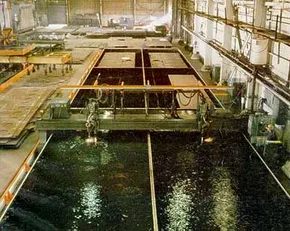

By the early 1960s, engineers realized they could push these machines further. They increased gas flow and narrowed the exit hole. Temperatures spiked. The tool stopped acting like a welder. It became a saw. It sliced through steel like a hot knife through butter.
This wasn’t just a minor tweak. It changed manufacturing. Manufacturers could cut metals with speed and accuracy that previous methods couldn’t match. To understand how a handheld device melts steel, you need to look at the physics. Specifically, you need to understand the fourth state of matter.
The Four States of Matter
You know solids, liquids, and gases. Water is the perfect example.
As a solid, water is ice. The atoms sit still in a hexagonal pattern. They hold their shape.
As a liquid, water is drinkable. The molecules bind together but move at slow speeds. It has a fixed volume but takes the shape of its container.
As a gas, water is steam. Molecules break free. They move independently at high speeds. No fixed shape. No fixed volume.
But heat adds energy. More heat breaks bonds. More heat creates gas. What happens when you add even more energy to a gas? You get plasma.
Creating Plasma Gas
Plasma isn’t magic. It’s just atoms stripped of their electrons.
Normal atoms have a nucleus of protons and neutrons, surrounded by a cloud of electrons. Heat this gas enough, and the energy rips those electrons away. The electrons zoom off. The nucleus is left behind, positively charged. These are ions.
The fast-moving electrons slam into other electrons and ions. They release massive amounts of energy. That energy is the heat. That heat is the cut.
Why Plasma Cuts Metal
Plasma cutters bypass resistance because of this unique state. Almost 99 percent of the universe is plasma. The sun is made of it. Lightning is made of it.
On Earth, plasma is rare because it requires extreme heat. But we found ways to contain it. Neon signs use “cool” plasma. Fluorescent lights use it. Plasma displays use it. These don’t cut metal. They just glow.
A plasma torch uses the same principle but cranks the temperature up to thousands of degrees. It melts the metal instantly. The compressed gas blows the molten material away. You’re left with a clean kerf.
Inside a Plasma Torch
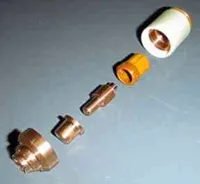
The hardware matters. A typical setup includes a power supply, a torch, and a gas source. The power supply creates an electrical circuit. The torch houses the electrode. The gas feeds through the nozzle.
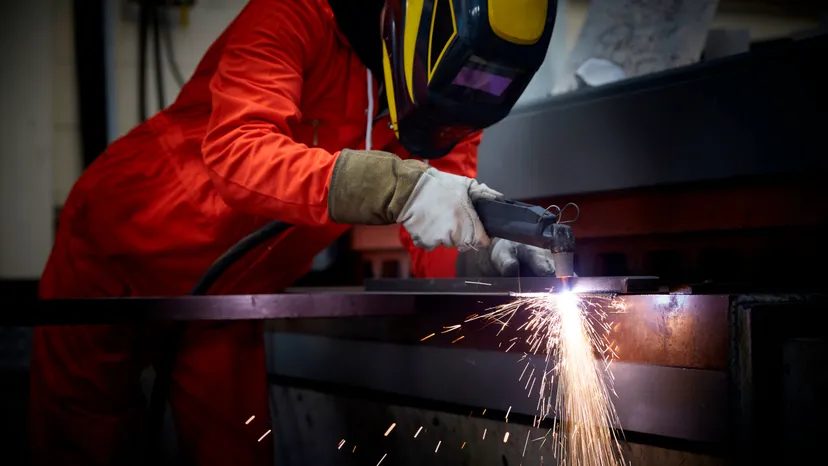
When you pull the trigger, the gas flows. A high-frequency circuit ionizes the gas, creating the plasma arc. The arc transfers from the electrode to the workpiece. The metal melts. The gas expels the slag.
Safety is non-negotiable. You need a helmet with the right shade. You need gloves. You need to work in a ventilated area. Fumes from certain metals can be toxic. Zinc, for instance, produces nasty fumes. Copper is dangerous too.
Which metal are you cutting? Steel? Aluminum? Stainless steel? The settings change. Thicker metal needs more amperage. Softer metals might warp if you move too slow.
There is no single “perfect” setting. You have to experiment. Start with a scrap piece. Watch the arc. Listen to the sound. A steady hum means you’re good. A sputtering noise means you’re too far away. Or too close.
It’s not just about heat. It’s about control. You’re guiding a bolt of lightning. One slip and you burn through the workpiece. Or yourself.
The technology started in WWII factories. It evolved in the 60s. Now it sits in garages across the country. It turns sheet metal into art. It turns rusted frames into new projects.
But the science remains the same. Heat. Ionization. Expulsion.
Why stop there? The next step is learning how to maintain the tip so it doesn’t crater after ten cuts. Or how to angle the torch to get a bevel without a fancy jig.
The cut is only as good as the setup.

The Science Behind the Spark
You don’t need a degree in physics to understand why plasma cutters work. They just need pressure, electricity, and a metal to burn through. Whether you are looking at a massive industrial robot arm or a handheld unit tucked into a contractor’s truck, the core design remains stubbornly consistent.
Here is how the magic happens. Inside the torch, a small channel forces pressurized gas like nitrogen, argon, or oxygen toward a negatively charged electrode. When you trigger the torch and touch the nozzle tip to the workpiece, you close the circuit.
A powerful spark jumps from the electrode to the metal. This spark doesn’t just warm up the gas. It superheats it until it hits the fourth state of matter. The result is a directed stream of plasma hitting roughly 30,000 degrees Fahrenheit. It moves at 20,000 feet per second. That is fast enough to reduce steel to molten slag before you can blink.
How Plasma Cutting Works
The plasma arc is not just hot. It is electrically conductive. As long as power feeds the electrode and the plasma stays connected to the metal, the arc continues. If that connection breaks, the cut stops.
To keep the arc stable and protect the cut from rusting instantly in the air, the torch design includes a second set of channels. These release a constant flow of shielding gas around the cutting zone. This gas does two jobs. It prevents oxidation. It also acts as a nozzle, regulating the radius of the plasma beam so you get a clean cut, not a melted mess.
Plasma on the Job
Understanding the mechanics changes how you approach the physical work. You are not just holding a hot gun. You are managing a high-pressure gas system and a high-amperage electrical circuit. Safety gear is non-negotiable. The arc emits intense UV radiation that can burn your eyes and skin in seconds. It also throws sparks and molten metal in all directions.
When you are out on a job, check your connections first. A loose ground clamp is the most common reason a handheld plasma cutter fails to start. The circuit never closes. The spark never jumps. You are just holding an expensive paperweight.
Material thickness matters too. Thicker steel requires more amperage and slower cut speeds. Thin sheet metal can warp if you move too slow or feed too much heat. Adjusting the gas pressure helps control the beam width. Higher pressure usually means a tighter, more precise cut. Lower pressure might be needed for delicate work where you don’t want to blow out the backside of the material.
The noise is another factor. Plasma cutting is loud. Not just loud, but a sharp, tearing sound. Ear protection should be standard issue, not an afterthought.
“The pressure of this gas flow effectively controls the radius of the plasma beam.”
This control is what separates a clean cut from a ragged edge. If your shielding gas is insufficient, the metal oxidizes rapidly. The cut surface turns black and brittle. It will need grinding or sanding later. That is wasted time.
Most handheld units let you dial in the amperage. Start with the manufacturer’s recommendation for your material thickness. Experiment. Listen to the sound. Watch the dross. If the cut slows down, you are
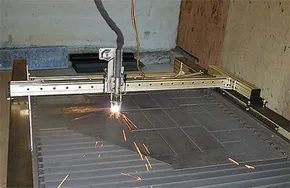

CNC stands for Computer Numerically Controlled. The key advantage here is zero contact. The machine does the work, not your hands. Today, these machines are everywhere in heavy industry. A plasma cutter paired with a computer-driven table lets operators slice through metal without manual guidance.
Custom auto shops rely on this tech. So do big manufacturers. They use it to build chassis. They use it to weld frames. Precision matters when you’re assembling a vehicle that needs to survive the road.
Construction firms take it a step further. They tackle large-scale projects where size is the enemy. Plasma cutters handle massive steel beams. They slice through thick metal sheets. The speed is unmatched for heavy-duty fabrication.
Locksmiths have a niche use case too. When a customer is locked out of a safe or vault, traditional tools might fail. A plasma cutter can bore through the locking mechanism. It’s a destructive entry method, but sometimes it’s the only one that works.
Cutting Thick Metals Into Plasma Art
Plasma isn’t just for industry. Artists have claimed it as a medium. Thick metal becomes canvas. You can cut intricate patterns into steel plates. The heat alters the edge, giving it a unique, rugged look.
For DIYers, this opens up possibilities. You don’t need to be a welder to start. You just need a CNC machine and a design file. The computer translates your vector graphics into torch movements. You set the parameters. The machine executes.
Safety is non-negotiable. Plasma cutting creates intense UV light. You need a helmet with the right shade. Sparks fly. They land on everything nearby. Clear the area. Have a fire extinguisher close by. Metal gets hot. Don’t touch it until it cools down.
Materials matter. Mild steel cuts cleanly. Stainless steel requires different settings. Aluminum is tricky because it conducts heat so fast. Adjust your gas flow and amperage accordingly.
The beauty of CNC plasma is repeatability. Cut one part. Cut a thousand more identical parts.误差 is minimal. This consistency is what separates a hobbyist project from professional-grade fabrication.

The Price of Entry Has Changed
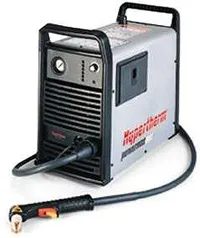
Plasma cutters used to be industrial beasts. You could only get them for massive jobs or if you had a serious budget. Today, that’s not the case. Prices have dropped. Sizes have shrunk. The barrier to entry is lower than it’s ever been. This shift means DIYers and hobbyists can finally get their hands on the tech.
Why Homeowners Should Consider a Plasma Cutter
If you are into metalworking, this tool changes everything. It’s not just about cutting straight lines. You can create art that standard shears or saws can’t touch. A handheld unit allows for bevels. It lets you bore precise holes. You can slice through medium-thickness stainless steel with ease. The flexibility is unmatched.
Think about what that means for a renovation project. Need to remove a heavy steel bracket? Cut decorative iron for a gate? Fix a rusted frame by cutting it into manageable pieces? The plasma cutter handles it. It’s one of the most powerful tools from the 20th century. It uses basic physics to harness plasma—the fourth state of matter. The results look almost magical.
How It Works and What’s Next
The science is simple but potent. You ionize gas to create a conductive channel. Electricity arcs through it. Heat melts the metal. Compressed air blows it away. That’s it. Yet, the application is vast. As we learn more about plasma, expect more tools to use this force. We’re only scratching the surface.
Where to Learn More
If you want to dive deeper into the science or compare hardware, these resources help:
- Torchmate : Good for general plasma cutter info.
- Miller : Explains “Why Plasma?” clearly.
- Plasmas.org : Offers deeper perspectives on the science.
- Plasma Gate : A hub for online plasma resources.
You might also wonder how this tech compares to other methods. How do fluorescent lamps work? How do plasma displays differ from neon lights? What about atomic structure? All these topics connect to the same underlying physics. Understanding the atom helps you appreciate the cut.
For now, focus on the tool at hand. The cost is down. The power is up. If you have metal projects, it’s time to look closer.