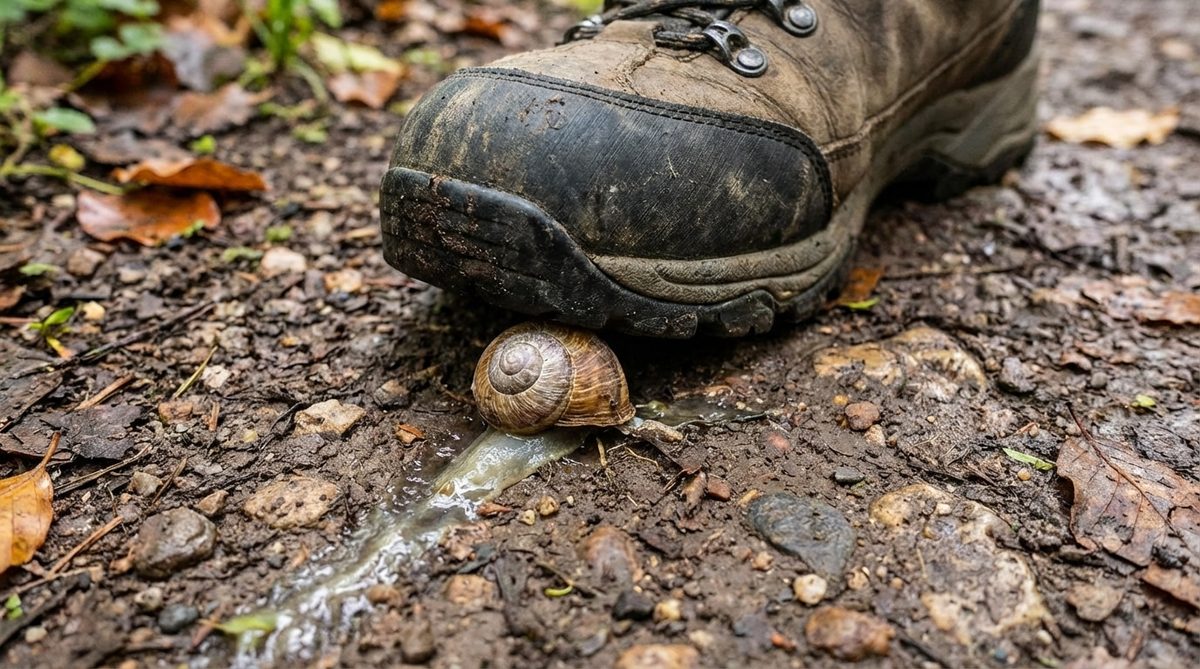
The garden is waking up. Rain. You can see them scattered on the wet ground. dead snails. Their shells look like garbage. Most people leave them aside. They think they are just trash.
they are wrong.
These shells are not garbage. They are hidden treasures. Natural resources that save crops. This is a well-known secret among regenerative gardeners. Don’t leave it on the ground to rot. Use them.
Why snail shells are better than egg shells
Nature has many tricks that we ignore. We are stepping on a snail’s shell. we ignore them. But for vegetable gardens, it’s white gold. What is the main reason? Calcium.
Snail shells contain a lot of calcium. But it’s not just calcium. This is the form of calcium that is actually available to plants. It has high bioavailability. Ordinary lime and eggshell take time to break down. Snail shell calcium is ready to go. It becomes food for soil microorganisms. Makes the roots strong. Keeps fruit firm.
The key here is assimilation. Plants need calcium to grow quickly. Spring seedlings need it. If you use snail shells, you can deliver them quickly. They integrate into the earth easily. You don’t have to wait long for decomposition.
How calcium biodisponibility can save tomatoes
Calcium is essential. Build cell walls. Prevent disease. But when calcium is trapped, plants starve.
Snail shell calcium has ideal solubility. Roots absorb it directly. This is most important in spring. The soil is warming. Growth spikes. Deficiencies show up fast.
Look at your tomatoes. Are the tips of the leaves brown? Blossom end rot? That is calcium deficiency. This happens when the temperature rises or watering becomes irregular. Plants cannot absorb nutrients fast enough. Snail shells help fill this gap. Offers a stable and convenient supply.
Which plants need the most calcium?
Not all plants are created equal. Some are calcium junkies.
Tomato is a classic example. Blossom end rot is a nightmare. It ruins the harvest.
Zucchini and other gourds require a sturdy structure to support the heavy fruit.
Fruit trees need calcium to strong wood and healthy buds.
Leafy greens like lettuce and spinach rely on this to for crispness.
Growing this requires calcium. Regularly. Snail shells are the perfect natural supplement.
How to identify calcium deficiency in your garden
You do not always see the problem immediately. Watch closely.
- **Brown leaf tips. They look burned. But this is not heat stress. It is a mineral lack.
- ** Malformed fruit. Tomatoes rot at the bottom. Peppers develop dark spots.
- **Slow growth. New leaves are small and curled.
- **Weak stems. Plants flop over in wind.
These signs often appear in the spring. Or after heavy rain floods the soil. Roots struggle to move nutrients. Fix the soil structure first. Add shells.
How to dispose of snail shells to get the most out of them
It is easy to collect. Processing matters.
**Step 1: Collect. **
Look after rain. Look at the early spring. Only empty shells are collected. Check inside. No meat. No slime. Smell them. If it smells, throw it away. When meat rots, it attracts pests. Bad odor is a no-go.
**Step 2: Clean. **
Rinse with water. Simple. No chemicals needed. Dry with paper towels. This removes bacteria from the surface.
**Step 3: Crush. **
Don’t break. The dust washed away too quickly. I want peace. Use 3-5 mm as a guide. Use a rolling pin. Or the bottom of a bottle. Crush them on top of the barrel.
Why this size? Larger pieces break down slowly. It releases calcium over several months. Small pieces improve soil aeration. Prevents compression. Microorganisms prefer this structure.
Zero waste gardening: a circular approach
Composting is very popular. But snail shells are different. It is rich in minerals. It is not rotten organic matter. They are part of the soil skeleton.
You can use them to close the loop. Nature took the snail away. Remove the peel. You feed the plants. Plants nourish you. Nothing has been lost.
It’s not just about saving money. It’s about building soil health. Healthy soil produces healthy food. The dead shell is the beginning of this cycle.
Don’t look at the waste. Start viewing resources. Your garden will thank you next season. The soil becomes lighter. The fruit becomes sweeter. No chemicals are used to achieve this.
But what happens when the summer heat hits? Calcium needs a certain amount of moisture to move. Dry soil prevents absorption. You don’t just need seashells. You should create a watering and mulching schedule. This is the next step. But now, please get out. Look at the ground. Pick up seashells.
Most amendments come with a warning label. Too much can upset the delicate chemical balance of the soil. Too little and you get nothing. The sweet spot? It’s all about math.
When it comes to calcium supplementation, it’s better to be specific than to guess. You aren’t just throwing stuff at the dirt. You provide certain nutrients to plants that really need them. The wrong dosage can make the soil highly alkaline and suffocate acid-loving plants like blueberries.
How much crushed snail shell is spread per square meter
The magic number is 150 grams per square meter. Not 200. Not 100. 150.
This amount is perfect for frequent feeders. Think tomatoes, zucchini, eggplant and fruit trees. These plants absorb calcium like water during drought. Strong cell walls are required to prevent blossom end rot and other structural defects.
Spring is a time of action. Spread the crushed shells around the base of the plant. Don’t leave it as is. Dig them in slightly. Use a hoe or hand fork. Break the surface of the soil. This mixes the minerals into the root zone where the action takes place.
This dose can be divided. Apply about half the amount in early spring. The rest will be used later in the season. This maintains a steady release of calcium. Adapt to the plant’s growth cycle. One big dump all at once is risky. It is safer to take small doses regularly.
Why accuracy is important: Avoid soil saturation
Calcium is amazing. However, more is not necessarily better.
Overdosing can raise the pH level. A high pH shuts out other nutrients. Iron becomes unavailable. Manganese disappears. Your plant is starting to turn yellow. They stunt. If the soil is too alkaline, it can destroy the soil structure.
Potatoes do not like high pH. Blueberries do not like high pH. If you grow these, leave out the snail shells. Or test the soil first. Simple kits available at garden centers will help you know what you’re dealing with.
The goal is a balanced ecosystem. You want the soil to stay alive. Microorganisms need a specific pH range to grow. If the pH fluctuates too much, you kill the workforce. No workers, no decomposition. There is no decomposition or recycling of nutrients.
Closed circuit: from waste to resources
It’s not just about gardening. It’s circular economy in your backyard.
Snail shells are waste. They fall off the plate. They are sitting in a trash can. You can stop the flow of waste by shredding it and returning it to your garden. Create a closed loop. Food waste, plant waste, peels, etc. all return to the soil.
This reduces weight in landfills. Buy less fertilizer. It builds a self-sustaining soil. Over time, the soil becomes self-fertile. Improves moisture retention. Improves drainage. It supports life.
It’s not just about growing food. You are rebuilding the ground you stand on.
Other kitchen scraps worth trying
Snail shells aren’t your only option. Look in your kitchen.
Eggshells are a classic choice. Also add calcium. Coffee grounds provide acidity and nitrogen. Wood ash increases potassium and raises the pH level. Banana peels provide potassium. Each has a different role.
Don’t throw everything everywhere. Combine the material with the plant. Acid-loving plants need coffee grounds, not ash. Fruit plants need the potassium contained in bananas. Green vegetables need the nitrogen in coffee.
Keep an eye on your garden. Observe how your plants react. Adjust the mixture. There is no single recipe. Every garden is different. Every soil is unique.
What the science says: INRAE studies snail shells
This is not just folk wisdom. Science backs this up.
The survey was conducted by the French national agricultural research institute INRAE. Their field studies show real results. Crushed shells improve the soil structure. They increase aeration. Prevents physiological diseases of the fruit.
Fruits grown using this improved method have fewer defects. It lasts better during harvest. The taste is usually stronger. Stronger.
Small pieces of minerals stimulate microbial life. Bacteria and fungi multiply. They break down organic matter faster. Release nutrients as needed. This can improve long-term fertility. This is not a quick fix. This is a slow build. A sustainable build.
New ways of use coming soon
This practice is still a niche market. But it’s growing.
Innovators are testing new ways to use these shells. Composite amendments. Mineral mulches. Natural soil treatment. The goal is to create an efficient and affordable fertilizer from local waste.
As the awareness of food waste increases, so do the by-products. Snail shells are a byproduct of eating snails. There are plenty of them. They are free.
Look at your garden differently next spring. Let’s look at waste from another perspective. The solution may be right at your feet. Or under the shell of a dead snail. Crush it. Spread it. Let’s see what happens. The soil will thank you.