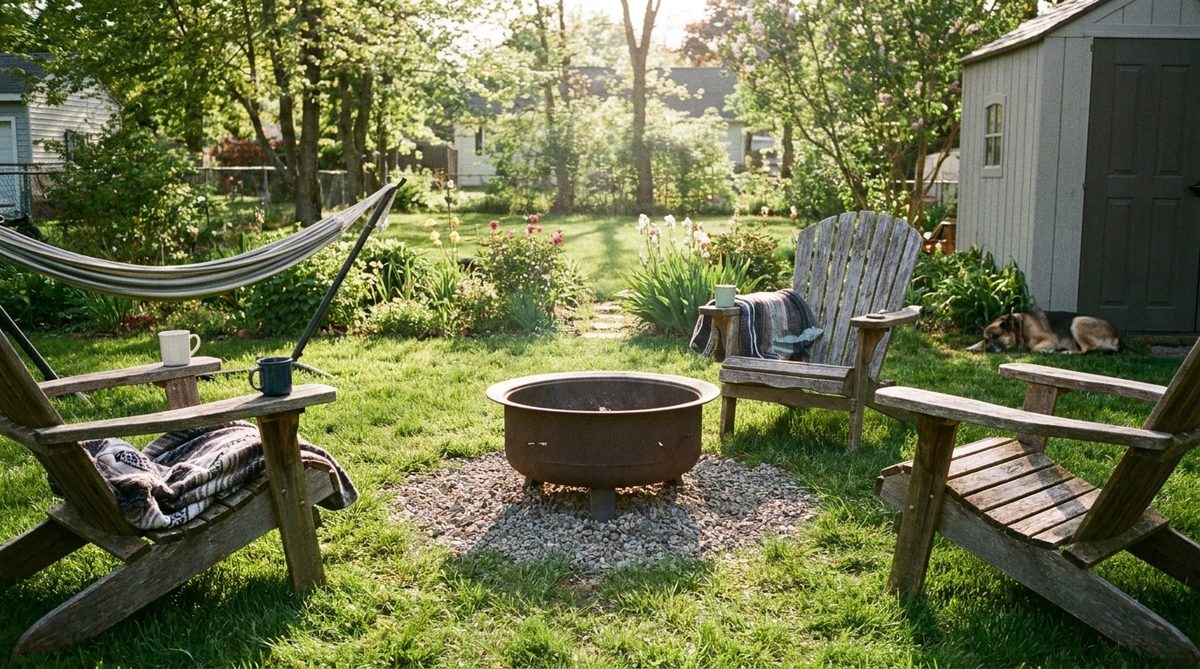
Spring evenings demand outdoor time. You want the stars. You want the heat. You don’t have a concrete patio. And the budget for a massive masonry project is zero.
That’s fine.
You don’t need heavy machinery to bring fire to your yard. It takes half a day. It takes some smarts. The result is a secure, warm spot for your backyard. Here is how to build a safe fire zone on imperfect ground without pouring a single gram of cement.
Choosing the Right Spot and Maintaining Clearance
Location dictates success. Before you move a single stone, look around.
You must keep a three-meter radius clear of vegetation. This is non-negotiable.
Hedges, trees, and bushes need space. Wind shifts in spring. Embers fly. If your fire pit is too close to foliage, you risk a disaster. Keep that three-meter buffer zone. It ensures peace of mind. It removes the stress of watching your garden catch fire.
Building a Non-Combustible Base
Skip the concrete mixer. You don’t need it.
The trick is a fireproof slab. Place it directly on leveled soil. Natural stone tiles or refractory pavers work perfectly. Reclaimed materials are even better for the budget.
Arrange them tightly. Make the surface slightly larger than your fire pit itself. This creates a custom base.
This thermal shield protects your lawn from intense heat. It also provides a level surface for your metal bowl. If the ground isn’t flat, you’re fighting gravity. Start with a level base.
Managing Sparks and Embers
The floor is set. Now, handle the fire.
Flames are unpredictable. Wood cracks. Embers shoot out. They can travel several meters.
You need a spark screen. Cover the fire pit every time you light it. A metal dome acts as a filter. It keeps dangerous debris inside the pit.
Now you can watch the dance of the flames. You can look up at the stars. You don’t have to worry about a stray brazier landing in your neighbor’s lawn.
Seating on Unstable Ground
A fire pit is useless without company. You want to gather. You want to talk.
Your grass might be uneven. It might be soft. Standard chair legs will sink in. That’s annoying.
Choose stable, low seating. Wide armchairs with flat feet are ideal. Cross-legged legs can dig into the earth. Flat bottoms distribute weight.
Arrange them in a circle. This encourages conversation. It keeps everyone close to the heat. It turns a patch of grass into a lounge.
Storing Wood Properly
Nothing kills the mood like a fire that won’t start.
It’s cold outside. You’re shivering. You need dry wood.
Set up a storage area nearby. Just a few steps away. This ensures quick access.
Here is how to store wood correctly:
- Use a metal rack. Lift it at least 15 centimeters off the ground. Ground moisture rots wood.
- Cover it with a waterproof tarp. Or build a small slanted roof. This blocks morning dew and sudden rain.
- Separate kindling. Keep small sticks and fire starters in a dedicated compartment. You shouldn’t have to fumble in the dark for tinder.
The Result
In a few hours, you’ve transformed a patch of grass.
You have a focal point for your home. The formula is simple:
- A fire pit on a non-combustible base.
- Three meters of clearance from plants.
- A spark screen for safety.
- Stable seating for comfort.
- Dry wood storage for convenience.
No concrete. No massive renovation. Just smart, modular solutions.
Your garden gets a second life this spring. The foundation is set. The wood is dry. The chairs are arranged.
All that’s left is to strike the match.
The magic of a starlit evening is waiting. Is your spot ready?