


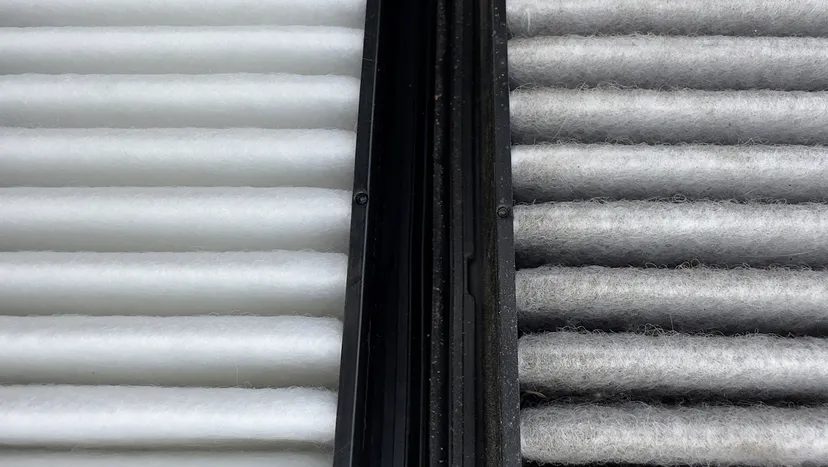
Clean furnace filters save energy and money, plain and simple. If you want your HVAC system to last longer and your indoor air to stay breathable, you need to keep those filters clean. But most homeowners are left guessing about the timeline. How often should you change furnace filters? And what happens to your energy bills if you ignore the schedule?
The answer isn’t just a calendar date. It depends on the filter you installed, the size of your home, and how much dust circulates through your ducts. We are breaking this down into practical steps so you can stop guessing and start optimizing.
What Furnace Filters Actually Do
Your heating and cooling system works by pulling air from your rooms, passing it over hot or cold coils, and blasting it back out through the ducts. The filter sits right at the intake point.
Its job is simple: trap the junk.
Dust, pet dander, and debris get sucked into the system along with the air. Without a filter, that debris coats the blower motor and clogs the coils. Clogged coils can’t transfer heat effectively. Eventually, they cause damage to the unit itself.
A properly functioning filter keeps the system running efficiently. It also determines how much of your indoor air is actually being cleaned. This depends entirely on the MERV rating of the filter you bought.
Understanding MERV Ratings
MERV stands for Minimum Efficiency Reporting Value. It is the industry standard for measuring how well a filter captures particles. The scale runs from 1 to 16. Higher numbers mean smaller particles are trapped.
Most residential filters fall between 1 and 8. You will see this number printed on the packaging. It tells you which particles the media can grab, measured in microns.
To visualize this, consider these sizes:
- Human hair: 60 to 75 microns
- Pollen: 10 to 100 microns
- Airborne dust: 0.5 to 5 microns
- Smoke particles: as small as 0.3 microns
Cheap, 1-inch thick disposable filters made of jumbled fiberglass usually carry a MERV rating of 1. They catch the big stuff. They miss almost everything else.
How Much Air Do You Actually Clean?
The MERV rating also dictates the percentage of particles removed from the airstream.
A filter with a MERV rating of 6 will capture about half of the particles in the air. Move up to a MERV 8, and you are trapping 70 to 85 percent of airborne debris. If you go for a MERV 11 or higher, the air exiting your filter is up to 95 percent cleaner than when it entered.
This efficiency comes with a trade-off.
Pleated Filters vs. Standard Mesh
Most homes have upgraded to pleated filters. These are made of nonwoven fabric with pleats that increase surface area. More surface area means the filter can hold more particles before it becomes useless.
Some pleated filters are treated with static electricity to attract allergens. They typically start at MERV 3 and go higher depending on the density of the fabric.
The denser the filter, the more it restricts airflow.
Think about wearing a dust mask while sanding wood. Breathing is difficult. Now imagine wearing a HEPA-grade mask. It blocks 97 percent of particles as small as 0.3 microns, but pulling air through it feels like trying to breathe through a straw.
Your HVAC system faces the same physics. A high-efficiency filter forces the blower motor to work harder to pull air through the media.
The Cost of Clogged Filters
Here is the catch: filter efficiency actually goes up as the filter gets dirty. The buildup shrinks the openings, catching more particles.
But this is only good up to a point.
Once the filter is too clogged, the restriction becomes a problem. The system cannot pull enough air. The blower motor runs longer to try to reach the set temperature. It runs continuously. This drives up your heating or cooling bills significantly.
A clogged filter is a silent energy hog.
You need to check your filters at least once a month. Change them immediately if they look gray or are covered in dust. Don’t wait for the season to turn. If you ignore the maintenance, you pay for it in energy costs and potential repairs.
When a Clean Filter Raises Red Flags
You installed a fresh furnace filter a month ago. Now it’s time to swap it out. You pull it off the rack, hold it up to the light, and squint. Nothing. It looks pristine. White. Sterile.
Is this good news? Maybe. It’s also a problem.
According to Freddie Williams, an air-conditioning technology instructor at Lanier Technical College in Oakwood, Georgia, a truly effective filter should look like it fought a war. By the time you hit that one-to-three-month change window, there should be gray, ashy residue on the duct-side surface. That build-up is proof the system is pulling particulates out of your air.
If your filter looks clean when it’s time to change it, stop. Don’t just toss it in the recycling bin and grab a new one. You might be wasting money on filters that aren’t actually working. Or worse, you might be missing a mechanical failure in your HVAC system.
Check the Fit and Flow First
The most common culprit for a “clean” filter is simple physics. If the air isn’t hitting the media, it’s not getting cleaned.
Is it fitting properly?
A loose filter is a useless filter. If there’s even a tiny gap between the filter frame and the slot, air takes the path of least resistance. It bypasses the filter entirely and cycles straight back into your ducts. Measure your slot. Buy a filter that fits snugly. No wiggle room.
Is it upside down?
Most filters have an arrow printed on the frame. This isn’t decoration. It indicates the direction of airflow. If you installed it backward, the air rushes past the filter instead of through it. Check the arrow. Make sure it points toward the blower fan.
Upgrade Your MERV Rating
Not all filters are created equal. If you’re using a cheap, low-end fiberglass sheet, it’s not catching much of anything. It’s mostly just structural support for your HVAC coils.
To actually clean the air, you need a higher MERV (Minimum Efficiency Reporting Value) rating.
* MERV 6: Catches about 50% of particles.
* MERV 11+: Catches up to 95% of airborne particles.
If your old filter looked clean despite being in place for three months, you might just be using a filter that’s too porous. Upgrading to a higher MERV rating forces the air to push through denser media, trapping more dust and ensuring the filter actually gets dirty.
The System Might Be Broken
Sometimes the problem isn’t the filter. It’s the machine.
Williams notes that a properly functioning system should run for about 15 minutes per cycle. It shouldn’t cycle more than three times an hour. If your furnace is kicking on for five minutes, then shutting off, then kicking on again, you have a short-cycling problem.
Short cycles mean the air isn’t staying in contact with the filter long enough to be cleaned. The air moves too fast. The filter stays clean because it’s doing almost no work. If your system is short-cycling, a new filter won’t fix it. You need an HVAC professional to diagnose the root cause.
Your Home’s Habits Matter
Finally, look at your lifestyle. A filter doesn’t get dirty if there’s nothing in the air to catch.
If you live in a tightly sealed home with no pets, no carpets, and no fabric furniture, your airborne particle count is low. If you vacuum and dust daily, you’re removing contaminants before they ever hit the HVAC intake. In this scenario, a clean filter is a win. It means your home is clean.
Also, consider your usage. If you installed a new filter in spring but don’t turn on the AC until summer, that filter sat idle for months. Of course it’s clean. The system wasn’t forcing air through it.
Why Your HVAC Filter Clogs (And What Happens)
Ignoring a dirty filter isn’t just about dust. It’s about efficiency and hardware survival.
Why Do Filters Get Dirty?
Airborne particles are everywhere. Skin cells, pet dander, pollen, soil dust. When your blower fan runs, it pulls this air through the return vent. The filter traps these particles in its fibers. Over time, those fibers clog.
What Happens If You Don’t Change It?
A clogged filter is a choke point.
1. Airflow Restriction: Air can’t pass through. Your system struggles to pull air.
2. Coil Freeze/Uncleanliness: Without airflow, the evaporator coils can freeze in cooling mode or overheat in heating mode.
3. Blower Strain: The fan motor works harder to pull air through the resistance. This increases wear and tear.
4. Energy Costs: A struggling system uses more electricity. Your bill goes up.
5. System Failure: Eventually, the heat exchanger can crack or the blower motor can burn out.
Replacing the filter is cheap. Replacing the blower motor is not.
Where Is the Filter Located?
Find the return air grille. It’s usually in a hallway or on a wall, not in the furnace itself (though some systems have it there too). Look for a slot where the air enters the system before hitting the coils. Pull out the old frame. Slide in the new one. Arrow pointing toward the fan. Done.
How Often Should You Change It?
One to three months. It’s a rule of thumb. If you have pets, kids, or live in a dusty area, lean toward one month. If your home is pristine and sealed, you might stretch to three. But don’t let it go longer. The cost of a filter is nothing compared to the cost of a repair bill.
Where to Find More DIY Knowledge
You have the basics. The tools are in the garage. The house isn’t falling apart. Now what?
There is a whole world of technical manuals hiding in plain sight. If you want to understand the mechanics behind the renovation, start with the basics of structure. How Home Floor Plans Work explains why your kitchen feels cramped or why the hallway drags on. It is not just about aesthetics. It is about flow.
Surfaces matter. If you are redoing a room, you need to know what you are touching. How Formica Works reveals why laminate peels when the adhesive fails. How Granite Countertops Work shows you why that stone is heavy, expensive, and needs sealing. Ignore this, and you will end up with a counter that stains from a dropped wine glass or a backsplash that lifts at the corner.
Then there is the enclosure. Installing a Fiberglass Shower and Tub Surrounds is a common DIY trap. It looks easy on a box in the store. It is not. One wrong angle on the wall studs, and water finds its way behind the panels. You will not see it until the dryrot sets in.
Why Your Home Has Too Much Dust
You cleaned. You wiped every surface. The air still tastes stale. Why?
It comes down to air pressure. Low Air Pressure and Dust highlights a simple physical reality. When your HVAC system pushes air out, it creates negative pressure inside. The house inhales. It pulls dust from the attic, the crawl space, and the cracks in the foundation. It is not just about the filter. It is about the seal.
Keep Dust Down offers practical fixes. Seal the gaps. Check the ductwork. If your return air is weak, the system starves. It pulls from the living spaces instead. That means it pulls the dust you just swept up right back into the room.
Which Furnace Filter Is Right for Allergy Sufferers?
If someone in your house sneezes when the heat kicks on, the problem is likely the filter. Frequently Asked Questions about Furnace Filters breaks down the MERV rating system. It is not marketing fluff. It is physics.
A low-rated filter lets particles pass through. A high-rated one traps them but restricts airflow. You need balance. Choosing a Home Air Filter from Lowe’s suggests looking at the specific needs of your home. Pet dander? Pollen? Construction dust from the neighbors?
The Dirt on Furnace Filters from The Washington Post reminds us that a clogged filter is a ticking time bomb for your furnace. It causes overheating. It trips safety switches. It shortens the lifespan of a $3,000 unit to save $15 on a monthly replacement.
Air Filters for Your Home from INDA explains the material science. Synthetic fibers trap smaller particles than pleated paper. Electrostatic charges attract dust. You are essentially building a sieve. Make sure the holes are small enough for what you want to catch, but big enough for the air to pass.
Spring HVAC Checklist
Do not wait for the first heatwave. Spring Cleanup List Begins with HVAC is a reminder that maintenance is seasonal.
Clean the coils. Check the condensate drain. Inspect the belt tension. These are not optional steps.

