No one wants to spend the weekend scraping dried glue off the wall. The thought of steaming, peeling and scraping traditional wallpaper until your back screams is enough for most people to paint over the old pattern. It’s messy, destructive and requires a lot of muscle. But the tide has turned.
The wallpaper isn’t just back. It has evolved. Millennials and design bloggers have fueled the aesthetic renaissance, but the real driving force is material science. Enter the removable wallpaper. It’s a no-strings-attached solution that lets you add functionality without compromising margins or health.
How peel and stick wallpaper works
The mechanism is simple. Unlike traditional rolls that require paste, water and carpentry-level precision, this modern variation uses pre-applied glue on the back. Peel off the backing paper and attach it to the wall. that’s it.
No water is needed. No tedious mixing of the paste required. And when it’s time to leave, you just peel it back. There is no steam. There are no scraping tools. The glue is designed to be removed cleanly and leave as little residue as possible.
“We’ve taken all the trials and tribulations of traditional wallpaper out,” says Julia Au, co-founder of Tempaper.
This concept didn’t come out of nowhere. A pioneer in the industry since 2008, Temppaper was launched after its founders—ex-set designers, noticed how much time decorators wasted scraping old paper from sets. This is a problem that budget and timeline killer. They realized that a better way to permanent homes was needed.
Installation: No special skills required
You don’t need an interior design degree to hang these. The installation process was forgiving, which is unusual for a DIY project.
Here is the actual breakdown:
- Prepare the surface: The walls must be clean, dry and in good condition. Primed or painted walls are best. Au notes that satin and semi-gloss paints are more durable than flat finishes.
- Start high: Start at the top of the wall and work your way down.
- Free adjustment: Because it is peel-and-stick, so if the strip goes crooked, you can remove it and fasten again. There is no “oops” that ruins the roll.
The vinyl-coated material is very durable. Although it is not completely waterproof, it can be used in wet places such as the bathroom. Even if you leave it on for years or even 10 years, it comes off cleanly.
Removal of wall covering
Taking it down is literally the reverse of putting it up.
Start from the top corner. Pull slowly and steadily. The glue comes off without tearing the paper or damaging the drywall. If you hang it for 10 years, it will fall off just as easily as the day it was hung. This is the key feature for renters. You can turn your sterile rental into a personal one without having to worry about “wall damage”.
Current design trends and materials
Don’t expect it to look like cheap contact paper. Manufacturers have filled this gap. Now you can get textures that mimic real materials.
- Textures: Grass fabrics and damask patterns are available in peel-and-stick formats. Although it looks like a woven natural fiber, it is not fragile.
- Metal: Metallic finishes are a strong trend.
- Pattern: Bold colors and Art Deco patterns can be seen everywhere.
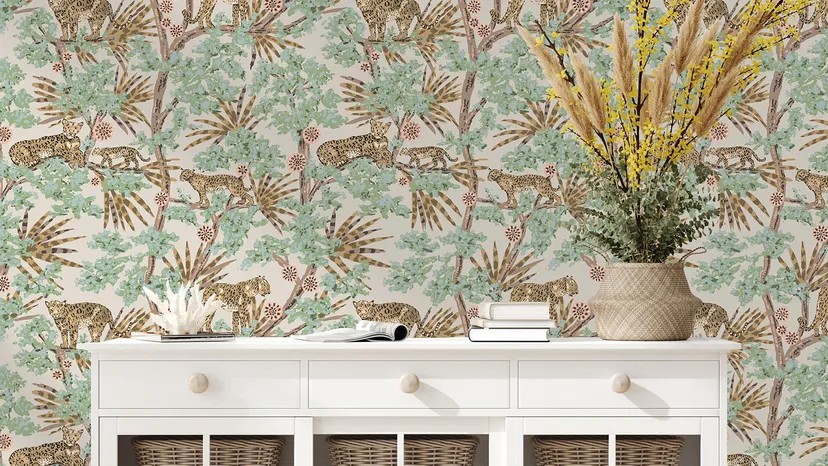
Temppaper’s creative director Jennifer Matthews points out that nature currently dominates the aesthetic landscape. Leaves, flowers and animal prints are huge. If you want your wall to tell a story, you have many options.
From big box stores like Home Depot to high-end retailers like Anthropologie, the market is full of choices. Elle Decor recently listed the top 45 options and suggests that this is not a fad. It’s a staple.
The barriers to entry are gone. You don’t have to commit to a look for ten years. There is no need to rent a steamer. All you need are scissors and a willingness to try something new. The old method was sticky, difficult and noisy. A new approach? Very quiet. It’s clean. And it comes off when you’re ready to move on.
What will you cover up first?
Texture currently guides the feel of interior design. Burlap and denim add grounding and warm comfort to the room. It’s a change from stylish minimalism to something you can feel.
Visual trends: patterns and themes
Visual trends are equally specific. Look for oversized marbles. White birch trunks can be seen everywhere. Citrus fruits and dahlia flowers complete the top patterns. These are not subtle. They are statements.
The colors are also vibrant.
“Overall, the colors are more vibrant than in years past,” Matthews said. “People want colors that are joyful colors, and I think that has to do with joyful interiors.”
It also brightens your mood. The palette is less gray in the color palette.
Wall fashion cycle
Why insist on permanent paste when your tastes change faster than runway models?
“It’s like fashion,” Au said. “You might like it one season, but the next season you won’t like it so much.”
This logic also applies to walls. Removable wallpaper is a modern solution. You can take risks without regrets. Peel it off. Pick something new. No contractors needed.
Custom printing and DIY options
Digital printing is a game changer. You aren’t limited to stock rolls.
Prints can be customized for retail spaces and movie sets. But it is also suitable for organizing themed parties. Do you want to fill your walls with vintage postcards or a certain abstract pattern? It is possible.
This will turn your wallpaper into a DIY project.
Find the right glue. Measure twice. Smooth out the air bubbles. The barrier between professional design and weekend projects is gone. Just like changing your clothes, you can easily change your environment.
The question is not whether it can be done. It’s what you’ll choose next.