Dorm walls are notoriously unforgiving. You cannot drill into cinderblock without risking your security deposit, and even then, you likely lack the tools. So, how do you organize a room that feels like a shoebox? You stop thinking about square footage and start thinking vertically. You use what you have, hack what you can, and accept that your bed is more than just for sleeping—it is your storage foundation.
The Entrance: First Impressions Matter
Start at the door. That empty patch of floor is dead space screaming to be used. A simple shoe rack creates an immediate “entryway,” grounding the chaos. Stick-on wall hooks take up zero inches of floor space but handle keys, jackets, and reusable bags with ease. Pair this with a floor-length mirror. The ultra-thin projection saves precious inches while ensuring you actually check your outfit before walking out.
Don’t store your shoes flat. They don’t have to sit horizontally. Go vertical. Over-the-door storage units are the unsung heroes of dorm life. Whether it is the soft, slotted fabric variety or a rigid metal framework, they turn a useless door into a closet extension. And no, they aren’t just for shoes. Socks, scarves, and gym gear fit right in.
The Bed: Your Central Hub
A lofted bed changes the geometry of your entire existence. Suddenly, you have a whole other layer of real estate beneath the mattress. This isn’t just aesthetic. It is functional square footage. Some students loft high enough for a desk underneath, creating a dedicated study zone. Others prefer storage cubes or drawers. The key is maximizing the height.
Under that loft? Drawers. Clever desk placement allows most furniture to line a single wall, leaving the center of the room open for movement. If you’re sharing a room, compact storage on both sides frees up the middle for floor games or, yes, TikTok dances. It’s about balance.
Speaking of balance, that space under the bed also fits a mini fridge. Perfect for late-night snacks when the dining hall is closed. Just make sure there is an outlet nearby. Pushing a desk against the end of the bed headboard-style saves space and creates a cozy nook.
Vertical Walls and Hidden Corners
Cinderblock is hard to decorate. But a curtain wall solves this instantly. Use heavy-duty tape or Command hooks to hang fabric a few inches away from the actual wall. This creates a shadow line that makes the room feel deeper and allows you to hide clutter behind the fabric—brooms, bags, the works. Just don’t lean against it; the illusion breaks if you touch the void behind the cloth.
Windowsills are often deeper than they appear. Don’t let them sit empty. A reading lamp and a wicker basket for books fit perfectly there. Depending on the sill’s placement, you might even fit a mini coffee machine or a cup of silverware. It’s unused surface area begging to be claimed.
For vertical storage, skip the bulky bookshelves that eat up floor space. A tall, narrow floating shelf takes up a tiny footprint but adds significant storage for textbooks and decor. Or try a multipurpose coffee table where the top slides off. Inside? Blankets and spare linens—the items that always seem to have nowhere to go when closet space is limited. Furniture that doubles as storage is the smartest investment you can make in a tight space.
Desk Real Estate: Command Center vs. Vanity
Your desk is likely issued by the school, meaning it’s standard, bland, and possibly lacking in storage. You have two options.
First, build a command center. Skip the hutch if the school doesn’t provide one; bring your own if allowed, or use over-desk shelves that don’t require drilling. Under a glass desk top, tuck to-do lists and planner sheets. Keep tablets and laptops stored sideways to free up surface area for books. Cord organizers hide the tangle of wires behind the desk, keeping your mind clear and your chargers findable.
Second, if your bathroom is down the hall and shared by dozens of people, your desk must serve double duty as a vanity. Use drawers for makeup organization instead of pens. Add a small folding mirror. Keep a travel cosmetic bag tucked inside. It saves you from fighting for counter space in the communal bath and keeps your essentials within arm’s reach of your study zone.
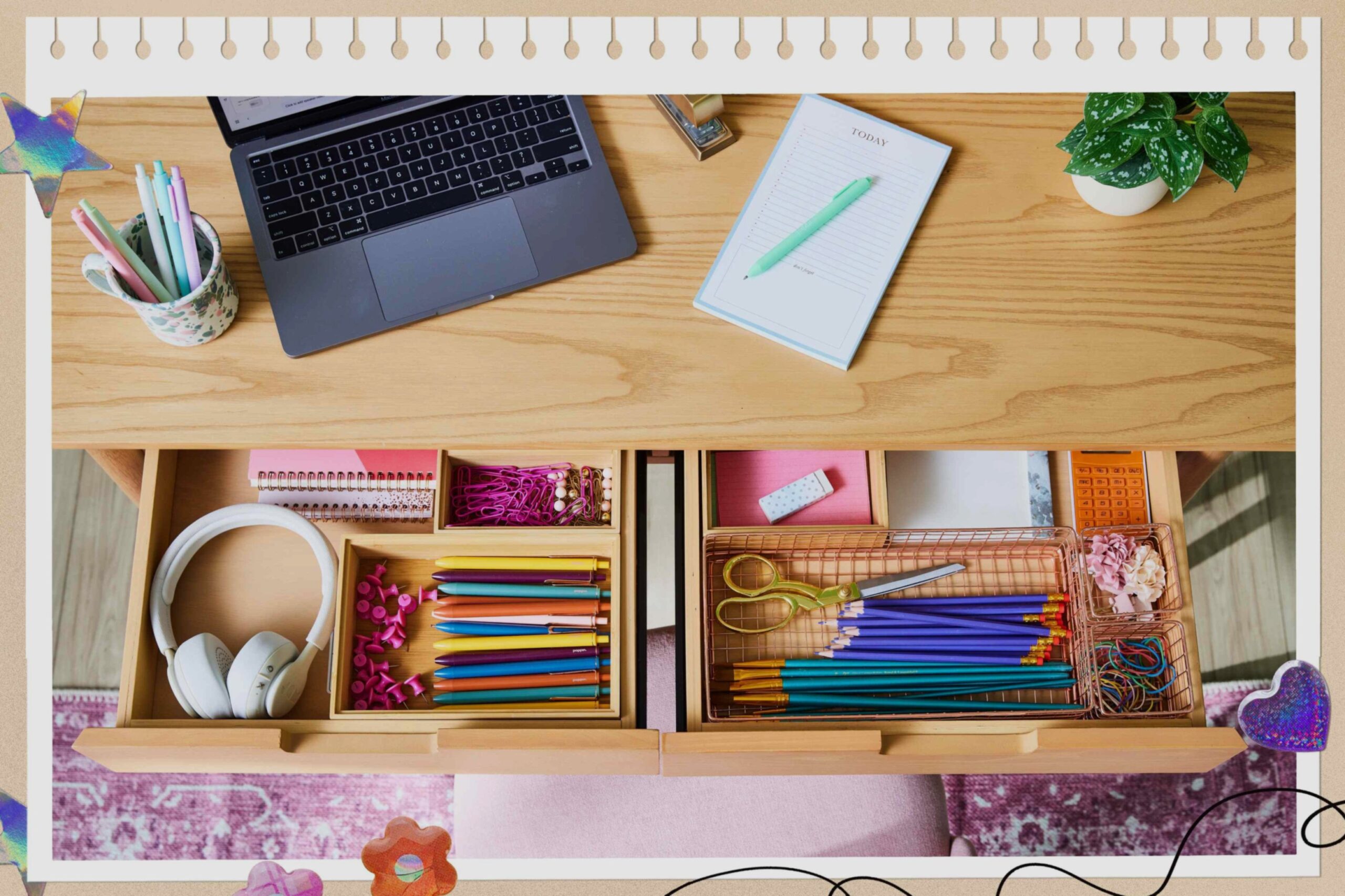
Inside the desk drawers, use organizers. Not for style. For sanity. If you know exactly where the erasers and index cards are, you spend less time searching and more time studying. Drawer organizers make it possible to fit even more inside while maintaining visibility. Acrylic bins are great for keeping everyday essentials like cotton rounds handy without cluttering the surface.
Clever Hacks for Tiny Spaces
Sometimes the solution isn’t new furniture. It’s existing furniture working harder.
- The Stool Hack: A stool with a removable top hides storage inside. Perfect for hair tools like straighteners and curling irons, which are bulky and dangerous if left out. If you don’t use hot tools? Clean supplies or anything you don’t need daily. It also doubles as extra seating for friends.
- Macrame Hanging Baskets: Under a lofted bed? Hang a basket. Don’t put a plant in it. Put fruit in it. Or a phone charger cup. It utilizes the dead air space beneath your frame.
- Jewelry on the Wall: Tiny nail holes are easy to cover. Or use sticky hooks. Hanging necklaces and bracelets keeps them from tangling and adds texture to the walls. It’s decorative and functional.
- Magnetic Storage: Think beyond the fridge. Magnetic microfiber cloths keep surfaces clean. Magnetic shelves on the mini-fridge front add storage. Or use magnetic strips above your desk for sticky notes and letters. It’s invisible storage.
- The Shared Nightstand: If roommates fight over aesthetic mismatch, get one central cabinet between the beds. It’s the perfect height for lofted beds, saves floor space, and stores humidifiers or headphones. Simplicity wins.
The Bathroom and Closet Struggle
If your dorm has a shared bathroom, shower supplies need a home. A shower caddy works if you trek everything back and forth. But if you have access to tiled walls, stick-on suction cup organizers hold shampoo and soap right in the shower. You can even use these suction cups on the side of your bed frame for extra utility.
Inside the closet (if you’re lucky enough to have one), install an over-the-door hanging rack. It doesn’t require drilling. It organizes backpacks and purses. Add baskets for out-of-season clothes. It streamlines your morning routine by making everything visible.
No closet? Use a tall wardrobe. And put a mirror on the inside of the door. You need a mirror anyway. Why let it take up wall space or floor space when the door is always there?
Finally, over-the-door hooks for towels. Every dorm needs this. Since doors are limited, divvy up the hooks with your roommate. They handle towels, jackets, and bags. No drilling. No damage. Just clean, dry clothes.
The Verdict
Organizing a dorm room isn’t about perfection. It’s about adaptation. It’s using a curtain to hide the mess, a lofted bed to gain floor space, and magnets to keep things clean. It’s accepting that your furniture must earn its keep. When every inch counts, you don’t buy for looks. You buy for utility.
Start with the vertical. Look up. Look under. Look inside. The space is there. You just have to claim it.
And when you finally finish arranging that last storage cube? You’ll realize the room feels bigger not because you added things, but because you removed the clutter. Or maybe you just finally found your other charger. Either way, it’s done.