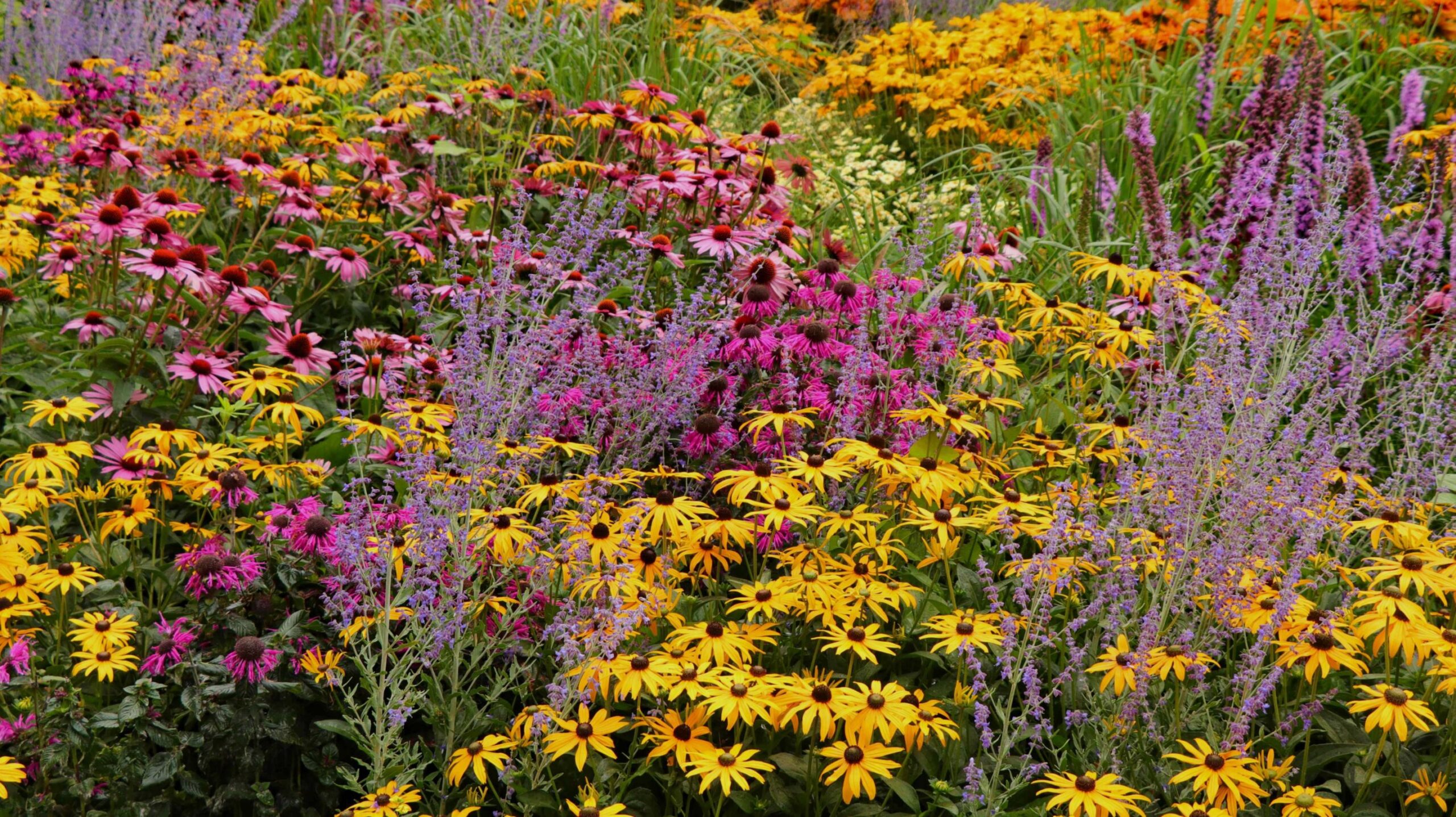
August heat usually drives gardeners indoors. We’re all looking for an excuse to escape. But there is a specific window here. It is the perfect time to put perennials in the ground. The soil is still warm enough to trigger root growth. The air is cooling down, which reduces transplant shock. Pests are winding down, too.
If you plant now, you set the stage for serious blooms when most other gardens are fading out.
We asked experts to break down which perennials survive August plantings and thrive later. Lucie Bradley of Easy Garden Irrigation and Melissa Rolston of Paramount Landscaping, Inc., shared the dirt on twelve tough, long-lived flowers. These aren’t just pretty faces. They are workhorses. They come back year after year, demanding very little in return.
Japanese Anemones
These are the ghosts of the fall garden. Elegant. Sculpted. They come in shades of pink, red, white, and even lavender. Bradley says August is the ideal planting month for them. The lingering warmth gives the roots a head start before winter freezes the ground.
Once they get going, they are robust. They don’t need much attention. Yet they act like magnets for wildlife.
- USDA Zones: 4-8
- Colors: White, pink, purple, lavender
- Size: 2-3 ft. tall by 4-6 ft. wide
Russian Sage
It looks like something out of a desert dream. Silver-grey foliage paired with spires of lavender-blue flowers. It attracts butterflies and hummingbirds like clockwork. This woody perennial is basically set-it-and-forget-it.
Bradley notes that the only real work is a hard prune. Cut it back to the ground in late winter. New growth comes thick and fast. It is drought-tolerant once established. You likely won’t need to feed it at all.
- USDA Zones: 3a–9b
- Colors: Blue, purple
- Size: 3-5 ft. tall by 2-4 ft. wide
Salvia
Salvia is prolific. The ‘Autumn Sage’ variety is a standout. August planting allows the roots to knit into the warm soil before the chill sets in. Most salvias want full sun. Give them six hours minimum.
They hate wet feet. Well-draining soil is non-negotiable. These plants are drought-tolerant, but only if their roots don’t sit in soggy muck. Pick colors ranging from salmon-pink to deep burgundy.
- USDA Zones: 10a-11b
- Colors: Salmon-pink, lilac, lavender purple, white, burgundy
- Size: 12 inches tall by 36 inches wide
Coreopsis
Bright. Cheery. Daisy-like. Coreopsis blooms from early summer right through to frost. Bees and butterflies love it. It is arguably the ultimate low-maintenance perennial. Thrives in full sun and well-drained soil. Drought-tolerant once settled.
The range of colors is staggering. Red. Orange. Yellow. Pink. White. The plant itself grows between two and four feet tall.
- USDA Zones: 2-11
- Colors: Red, orange, yellow, pink, White
- Size: 2–4 ft. tall by 1-2 ft. wide
Purple Coneflower
Coneflowers are native staples. They love the sun. They tolerate a little shade, which makes them versatile. Rolston calls them reliable. They handle late-summer heat without sweating.
“They hold up in late-summer heat and comeback stronger every year,” she says. Pollinator-friendly is the key phrase here. Your garden will buzz with life if you plant these.
- USDA Zones: 3-8
- Colors: Pink, purple
- Size: 2–5 ft. tall by 1–2 ft. wide
Black-Eyed Susan
Native to the central US, these golden beauties thrive anywhere. Poor soil? No problem. Roadsides? They like it. They bloom all fall. Rolston uses them to add warmth to mixed beds. The contrast between yellow petals and dark centers is striking.
“In fact, these golden beauties handle poor like champs and bloom throughout fall. They’re great for adding warmth and contrast in a mixed bed.”
- USDA Zones: 3-9
- Colors: Yellow, orange, red
- Size: 2-3 ft. tall by 1-2 wide
Coral Bells
Not just for the flower show. Coral bells are grown largely for their foliage. The leaves come in vibrant reds, whites, pinks, and oranges. Small bell-shaped flowers pop up on slender stems. They are perfect for pollinators.
Rolston loves them for shady spots where nothing else grows. They stay colorful well into autumn. Their compact habit makes them ideal for borders or large containers.
- USDA Zones: 4a-9a
- Colors: Red, white, pink, orange
- Size: 8–18 in. by 12–24 inches
Sedum
Sedum is a succulent. It is tough as nails. It comes in all heights and colors. Small star-shaped flowers attract butterflies. Cut the stems, and you have a bouquet that lasts into winter.
Rolston specifically recommends ‘Autumn Joy.’ It transitions from green summer leaves to rusty red fall colors. It is sculptural. It is hardy. It handles August heat easily.
- USDA Zones: 3-10
- Colors: Red, pink, yellow, white
- Size: 6–24 inches tall by 12–24 wide
Daylilies
Forgive everything. That’s daylilies. Bad soil. Missed watering. Deer eating the leaves. They don’t care. They are fast-growing. Long-lived. Popular for borders.
They come in every hue you can imagine. Red. Orange. Purple. Pink. They survive frost. They survive scorching heat. They are practically indestructible.
- USDA Zones: 3-10
- Colors: Red, orange, yellow, purple, Pink
- Size: 6 inches to 5 ft. by 2-4 wide
Bee Balm
Wild charm. Spiky blooms. Native to North America. It spreads via underground rhizomes. It fills space quickly. Rolston calls it her personal favorite for late-season planting. It attracts pollinators aggressively. It brings a soft, wild feel to cultivated beds.
It feels effortless. Like nature took over your landscaping plan.
- USDA Zones: 3-9
- Colors: Red, purple, pink, White, lavender
- Size: 10–48 inches tall by 10–36 inches
Snapdragons
Technically perennials in warm zones, though often grown as annuals in the north. They bloom spring to frost in cold climates. In heat, they might take a nap. Return when it cools. They love bumble bees and butterflies.
They add vertical structure. Heights range from six inches to four feet. Colors are wide and vibrant.
- USDA Zones: 7-11
- Colors: White, yellow, Pink, Red, orange, Purple
- Size: 6–48 inches by 6–12 wide
Sneezeweed
Massive clumps of daisy-like flowers. Long blooming period. Wild perennial energy. Low maintenance. If you prune it, it grows more flowers. Pruning stimulates production.
It fills space aggressively. The colors are fiery. Yellow. Orange. Red. It brings heat to the garden when the season is winding down.
- USDA Zones: 3-8
- Colors: Yellow, Orange, Red
- Size: 3–5 ft. by 2-3 wide
Planting in August feels risky if you’re used to spring gardening. But the data supports it. The soil retains summer warmth. Roots establish before dormancy. The result is a garden that doesn’t just survive winter but explodes with life the next year.
Water them in. Wait for the roots to lock in. The blooms might be sparse this fall. The real show happens when others have given up.