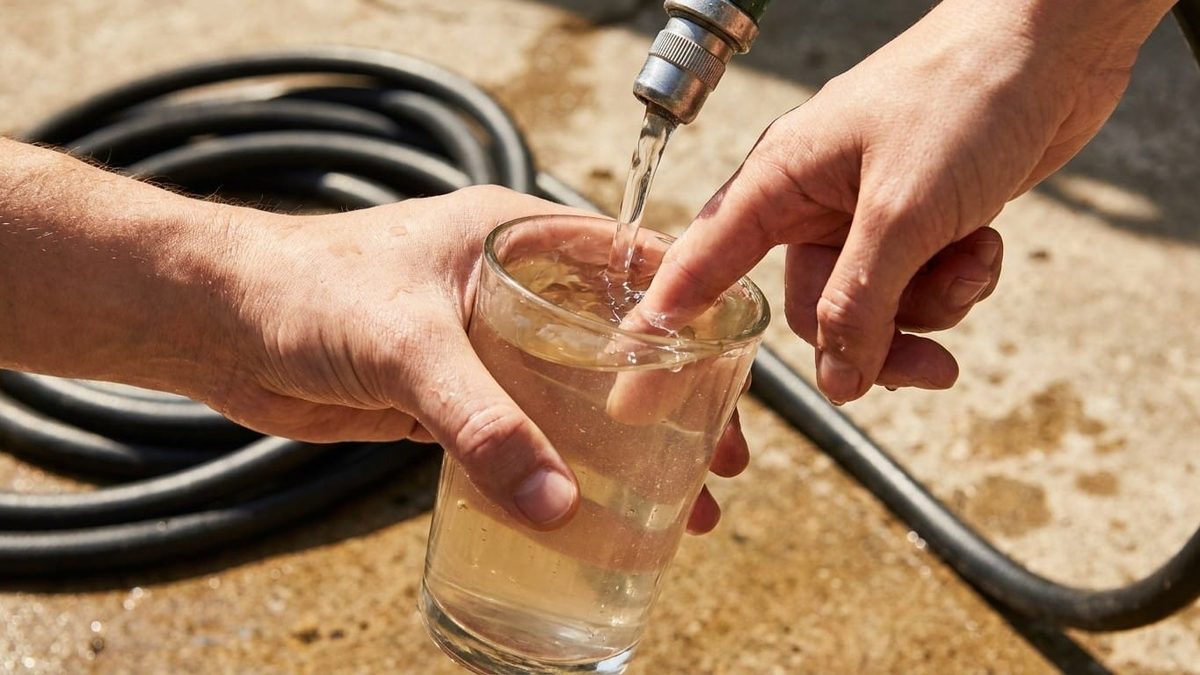
Fill a glass with the first water that gushes from your hose. Dip your finger in. If it burns, stop. That is normal physics. Water sitting in a black hose under direct sun can hit 60°C. That is not a myth. It happens after just a few hours of exposure. You were probably going to pour that boiling water directly onto your tomatoes or roses.
Do not do it.
The danger is real. A study in the National Library of Medicine database measured exactly what happens inside a hose exposed to heat. It depends on what the hose is lying on. With air at 35°C, water in a hose on grass reached 47.3°C. On concrete? It hit 49.8°C with air at only 28.5°C. Concrete stores and releases heat far more efficiently than grass.
In Missouri, firefighters measured 103°F (39°C) in a black hose and 97°F (36°C) in a white one after one morning. In Louisiana, a fire captain timed it. After just 35 minutes in the sun, the internal temperature hit 130°F (54°C). Color matters. Black absorbs the entire solar spectrum. It is the worst choice for a hot summer.
The Root Shock Nobody Sees Coming
Gardeners have a persistent superstition. They fear the “lens effect” of water droplets on leaves baking in the sun. It is a legend. A distraction. It keeps you looking up when you should be looking down.
The real threat is underground. The root system. It is fragile. It lacks the protective cuticle of leaves. Pouring 50°C or 60°C water at the base of a plant causes brutal thermal shock. You might see wilting leaves and blame drought. Or a pest. Or bad fertilizer. The culprit is often just your hand, repeating a daily mistake.
“The ideal water temperature for gardening is 18°C to 23°C.”
Compare that to the 55-60°C in a sun-baked hose. The difference is 30 to 40 degrees. That gap is enough to stress any root system used to consistent soil freshness. Tomatoes, peppers, and summer crops need that stability. Give them boiling water and you get silent death.
PVC Leaches Chemicals Too
Heat is only half the problem. Your PVC hose is a problem regardless of the thermometer.
When water stagnates in a plastic tube heated by the sun, chemical interactions accelerate. The longer the water sits, the more it interacts with the plastic surrounding it. This is why you should never use the first liters flowing from the tap. Ever. Even during a mild spring.
The solution is free. It takes five seconds.
Open the tap. Let the water run into a basin or directly onto a gravel path. Do not aim at your plants. Wait until the cold water from the main network takes over. Then aim at your flowers.
A paramedic in Alberta recommended this exact precaution for recreational use. Keep the stagnant, chemically active water out of children’s play and animal drinking. Apply that same logic to your garden.
Flush the line. Then water. Your plants will thank you with growth, not shock.
Keep the hose out of the sun
Most people leave their hoses lying in the direct heat. This is a mistake. The water gets hot. Then you have to let it run until it cools down. You waste gallons of water. You wait. It is inefficient.
Store the hose in the shade. That is the single most effective habit. Keep the water temperature reasonable. You stop purging liters of hot water every time you start. Use a wall-mounted reel. Place it on the north side of your house. Or just tuck it under a bush. The goal is to limit direct exposure. Simple. Effective.
Mulch to buffer the shock
You can also cool the soil itself. This is where mulch comes in. Apply a five to ten centimeter layer. Use straw. Use dry leaves. This reduces ground temperature. It fights evaporation.
Even if the water is slightly warm, the mulch absorbs the thermal shock. A tomato plant with mulch handles warm water better than one in bare dirt. Bare soil radiates heat directly into the roots. Mulch provides a buffer. Protect the plant from the heat.
Color matters more than you think
Few gardeners know this. The color of your hose counts. A light-colored hose stays cooler. Choose gray. Or pale green. Avoid black tubes. Dark tones absorb the entire light spectrum. They do not reflect it.
This is not just an aesthetic choice. It is a functional one. On a July afternoon at 35 degrees Celsius in the shade, a light hose makes a concrete difference. The water stays cool. The work gets done faster.