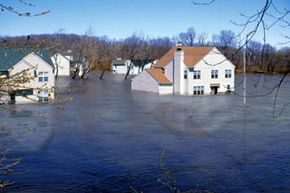
Wilmington, Vermont, looks like it belongs in a postcard. It sits in the southern part of the state near Mount Snow. You can smell the maple syrup from Dot’s Diner. Locals and tourists alike order the inch-thick blueberry pancakes. Down the street at Al Wurzberger’s 1836 Country Store, shoppers fill bags with cheddar and fudge. In summer, hanging baskets line Main Street. It is the kind of place people dream of living.
Then came 2011.
Hurricane Irene didn’t just visit. It hit hard. The storm turned tropical and dumped rain on the town. The Deerfield River, usually tame, broke its banks. Water rushed downstream. It reached the second floor of Dot’s. Stores and restaurants were ruined by mud and water.
Vermont wasn’t alone. Flash floods tossed houses around. Covered bridges became floating debris.
When the water receded, homeowners expected their insurance to pay. It didn’t. Most policies don’t cover flood damage. People needed special protection from the National Flood Insurance Program (NFIP). Only 3,673 homeowners in the whole state had it.
What is flood insurance and how does it work?
Rain is coming. It’s inevitable. Whether you are in Missouri, upstate New York, or Iowa, heavy rain causes runoff. Winter melt floods streams. Ice-clogged rivers burst their banks.
Floods are common. They cause billions in damage every year. Some happen slowly. Others hit in a flash. You probably aren’t ready.
The Insurance Information Institute found that in 2011, only 14 percent of U.S. homeowners had flood insurance. That number was up four percent from the previous year. Most buyers live in the South. The Midwest has fewer policies.
Standard homeowners policies cover water from inside the house. Burst pipes. Broken faucets. They do not cover outside water. If a river overflows or surface water runs into your home, you are on your own.
Congress created the NFIP in 1968 to fix this. It helps property owners rebuild. It helps them replace belongings.
The policy pays for direct physical damage to the structure. You need a separate policy for what is inside. Homeowners can get up to $250,000 for the house. They can get up to $100,000 for possessions. Renters can buy coverage too.
FEMA runs the program. They don’t sell insurance directly. Private companies sell it. The government sets the rates. Prices are the same across companies.
Cost depends on risk and coverage amount. The average premium is $520 a year for $100,000 of coverage in a home without a basement. A home with a basement costs $615 a year.
Filing a claim is similar to a regular insurance claim. An adjuster surveys the damage. You must submit a proof of loss form to the insurance company within 60 days.
Do you need flood insurance?
The question isn’t if you can afford it. It’s if you can afford not to have it.
Most homeowners think their policy covers everything. It doesn’t. If the water comes from outside, you are exposed. The Deerfield River didn’t care about Wilmington’s charm. It didn’t care about your savings.
The NFIP exists because private insurers won’t take the risk. They pass that risk to the government. You pay a premium to a private agent. The government subsidizes the risk.
If you live in a flood-prone area, you need this coverage. If you don’t, you might think you are safe. One storm changes everything.
Only 3,673 homeowners in Vermont had flood insurance after Irene.
The system works. But it requires action before the water rises. Waiting until the rain starts is too late.


Bill sits at the end of the bar, nursing his drink. You see him occasionally. He lives down by the river, close to my fishing spot. The winter of 2010 to 2011 was brutal. Snow melt met heavy rain. The river swelled. It swallowed Bill’s house. He had flood insurance. It helped him rebuild.
Most repairs were done by October 2011. Then came Hurricane Irene. Vermont drowned. Bill’s house flooded again. Now I understand why he sips whatever he sips. Flood insurance covered the second round too. He wants to sell now. I don’t blame him.
Before you buy flood insurance, check eligibility. Nearly 20,000 US communities join the NFIP. To participate, they must enforce floodplain ordinances. FEMA watches them. If your community joins, you can buy coverage. Zone risk doesn’t matter. High or low. If your community doesn’t join, you’re out of luck.
How do you know your risk? FEMA has nearly 100,000 maps. They show high-risk and moderate-to-low zones. Bill already knows his. If you are in a high-risk zone with a federally-backed mortgage, the law says you need flood insurance. It’s not optional. Buildings here have a 26 percent chance of damage during a 30-year mortgage term. That’s not a small number.
Coverage Limits and Costs for Moderate-to-Low Risk Areas
Living in a moderate-to-low risk zone? The law doesn’t force you to buy it. You should anyway. FEMA data shows these areas file over 20 percent of claims. You can get up to $200,000 in coverage. Cost? About $405 a year with a basement. $365 without. Even if you’re on a hill, buy it. Mudflow damages hillside properties. The policy covers that too.
The safety tip is simple. Never flooded before doesn’t mean you won’t. Hurricanes. Failed levees. Clogged drains. Rapid rain. All cause floods. All are covered. Just ask Bill. And ask the people of Vermont.
What Does Standard Flood Insurance Actually Cover?
It pays for direct physical damage to your structure. Standard homeowners policies usually handle burst pipes or broken faucets. They don’t handle rising river water. Or surface water running into your basement. That’s the gap. Congress created the NFIP in 1968 to fill it.
You need a separate policy for your stuff inside. The building coverage doesn’t protect your furniture or electronics when water rises.
How to File a Claim
Filing works like a regular homeowners claim. You file. An adjuster surveys the damage. You then submit a proof of loss form. You have 60 days to do this. Don’t miss the deadline.
Who Actually Sells the Policy?
FEMA doesn’t sell it directly. Private insurers do. The government sets the rates. They are fixed. Every company charges the same for the same risk level. Shop around for service, not price on the base premium.
Average Premium Rates
Expect to pay around $520 a year for $100,000 of coverage if you have no basement. $615 if you do. These are averages. Your specific map location and elevation will adjust the final number.