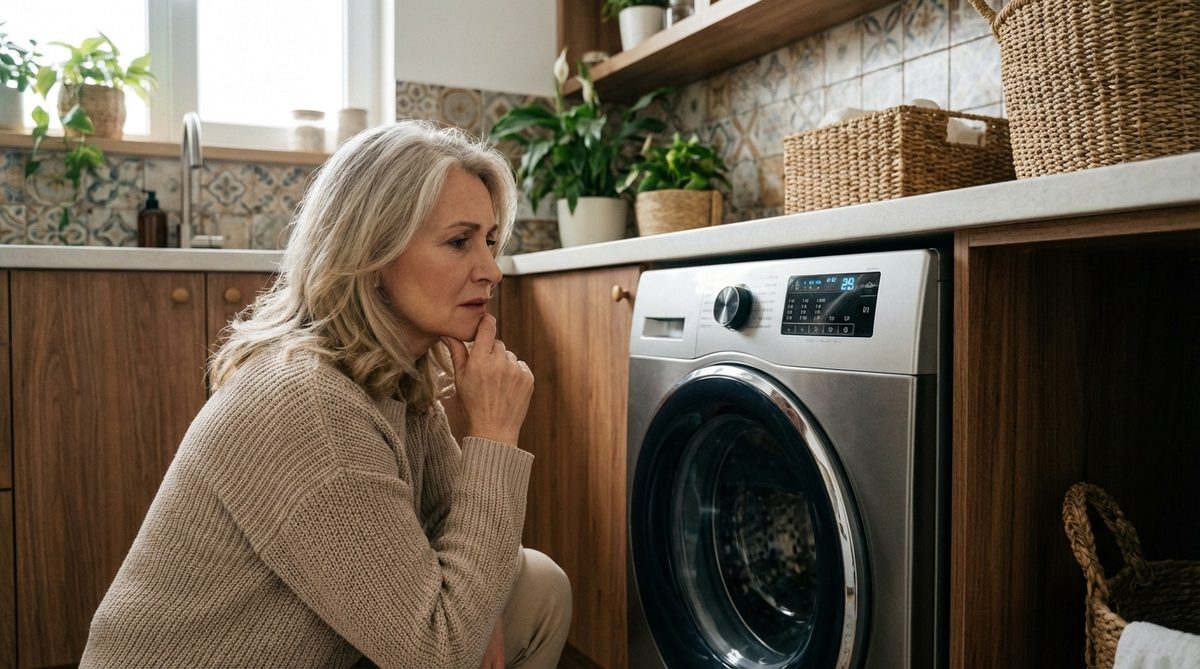
You set the dial to 40 °C. The detergent smells like fresh linen. But when the cycle ends, your t-shirt reeks of damp basement or shows gray rings around the collar. It happens often. The temperature on the label rarely matches the heat actually reached inside the drum.
Modern machines optimize for time, not thermodynamics. Eco modes heat less intensely but for longer periods. They rely on mechanical agitation and soaking rather than pure thermal energy. Water might stay lukewarm for most of the wash. Only the heating element spikes briefly. The sensor measures a specific spot, not the whole tub. With a full load and cold inlet water, temperature distribution becomes uneven. The number on the screen is a guide, not a guarantee.
Understanding this gap stops you from overdosing detergent. It also prevents blaming your clothes for problems caused by the machine’s logic. You can protect fibers and the drum itself by adjusting how you interpret those settings.
Disinfecting Requires More Than Heat
Heating water and disinfecting are different tasks. Heat dissolves grease and activates surfactants. But killing bacteria requires sustained exposure. A short, warm cycle cleans visually without sanitizing deeply. This is dangerous for items that stay damp, like sports gear or towels.
Biofilm builds up in the machine when it doesn’t get regular high-heat treatment. This isn’t about hygiene obsession. It’s about maintenance. Washing isn’t always sanitizing. The machine needs consistent heat to stay healthy.
Signs you are washing too cool include:
– Musty smells upon drying
– Clothes graying faster
– A “perfumed clean” that feels unclean
Inside the drum, you’ll see clumps of lint in the seal. The detergent drawer gets sticky. Dark residues accumulate in the tub. A dirty tank forces you to use more detergent. More detergent creates more soap film. It’s a vicious cycle. The solution isn’t blasting everything at maximum heat. It’s finding a balance. Use lower temperatures for most textiles. Use targeted hot cycles for household linens and internal maintenance.
The 30 °C Standard for Daily Wear
For most daily clothing, 30 °C is sufficient. This covers colors, synthetics, light cotton, and non-delicate underwear. This temperature limits fiber distortion. It preserves dyes. It reduces shrinkage risk.
It also prevents premature wear. Hot water damages blends like cotton-spandex or viscose. The key is matching the program to the soil level, not just the temperature. A standard 30 °C cycle with adequate duration works better than a quick, lukewarm wash. Quick cycles don’t rinse thoroughly.
Stick to 30 °C as your baseline. Ensure the cycle is long enough for the detergent to work.
When to Go Higher
Sometimes you need to turn up the dial. Grease stains, heavily soiled jeans, and intensely sweaty sports clothes benefit from 40 °C. This helps dissolve oils and odors. Only do this if the fabric allows it. Don’t mix these items with delicate loads.
Preparation matters more than heat. Treat stains before washing. Never leave damp clothes in a bag. Start the machine soon after wearing. For sports gear, a specific cycle or extra rinse might outperform higher heat. Heat helps, but it’s not the only answer. Mechanical action, rinsing, and quick drying are equally important.
Several habits compensate for the lower temperature. Maximize efficiency without damaging fibers or fouling the drum. A well-charged machine improves tumbling. It enhances stain removal. It reduces unnecessary friction.
- Dose accurately. Adjust detergent based on water hardness and actual load weight. Avoid residue.
- Load correctly. Fill the drum about three-quarters full. This allows clothes to tumble freely.
- Spin wisely. Use higher speeds for robust fibers. Use lower speeds for delicates.
- Sort intelligently. Wash colors together. Keep towels separate. Isolate heavily soiled items from light loads.
- Empty quickly. Remove laundry immediately after the cycle. Air out the drum to prevent odors.
The difference between a clean smell and a stale one often comes down to what happens after the wash ends.
Why 60°C Is the Gold Standard for Sheets and Towels
Thirty degrees gets you out of bed, but sixty gets you clean. There is a reason why wash sheets at 60 degrees remains the premier advice from hygiene experts. It isn’t just a habit. It is chemistry. Bedding accumulates sweat, dead skin cells, and humidity. Towels soak up moisture from your body. At lower temperatures, you are mostly moving dirt around. At 60°C, you kill dust mites and bacteria. You stop that weird smell that says “clean but not really.”
This temperature also protects your washing machine. Hot cycles prevent the buildup of grease deposits and biofilm inside the drum. You don’t need to wash everything this hot. Just reserve it for the items that matter. The payoff is obvious. Your sheets stay fresh longer. You don’t need to dump half a capful of detergent or spray air freshener to mask odors.
The Softness Trap: Stop Using Fabric Softener
Why do your towels feel like sandpaper? Why do your sheets turn grey? Check the bottle. You are likely using too much fabric softener. Or not enough detergent. Both are disasters. Softener coats fibers. It reduces absorption. It traps odors inside the weave instead of washing them out.
Too much detergent leaves a film. It makes fabrics stiff and “cardboard-like” as they dry. The solution is simple. Measure your detergent. Use the 60°C cycle. Ensure a complete rinse. Softness comes from proper rinsing and drying, not from chemical coatings. Never mix heavy towels with light linens. Towels hold more water. They need a different spin cycle. They need to dry completely. If you pile them up damp, you invite mold.
Drying Matters as Much as Washing
A damp towel is a breeding ground. If you do not dry your towels completely between uses, they smell. No amount of detergent will fix that smell once it sets in. The routine is key. Wash regularly. Dry thoroughly.
For fluffy towels, use an effective spin cycle. Hang them in a well-ventilated space. If you have a dryer, use it. Do not overheat. High heat damages fibers. The goal is moisture removal, not cooking the cotton. Wash sheets at 60°C if you have been sick, if you sweat a lot, or if your bedroom lacks airflow. Complete drying preserves whiteness and absorption. It keeps things feeling fresh without extra products.
When to Crank Up the Heat to 90°C
Not all white fabrics are created equal. Standard white sheets? 60°C is enough. It maintains brightness. It stops greying. But sometimes you need to go higher. 90°C is for heavy-duty cotton. Think kitchen towels. Think heavily soiled linens. This temperature strips deep grime.
Check the label. If it says “cotton blend,” do not blast it with 90°C. It might yellow. It might shrink. Thick, 100% cotton items handle the heat best. Use 90°C as a periodic deep clean. Not a weekly habit. You want your fibers to last.
Handling Illness and Delicates
Sick in bed? Change the rules. Use 60°C minimum for the patient’s linens. Pajamas. Sheets. Towels. This helps sanitize the fabric. It targets secretions and heavy sweat. Do not let the laundry sit in a basket. Humidity breeds bacteria. Wash it quickly. Dry it completely.
If the item cannot handle 60°C, you are in a harder spot. You need a longer cycle. A better rinse. Strict handling hygiene. But remember, if you can wash at 60°C, do it. It is the safest bet for hygiene.
The Limits of Heat
Stop. Look at the fabric. Wool. Silk. Viscose. Technical fabrics. Do not push these to high temperatures. They will not survive. Synthetics with elastane lose their shape. Colors bleed. High heat causes two main problems. Shrinking. Fading. It also wears out seams and prints faster.
Keep 60–90°C for identified, durable families of linen. Use 30°C as the baseline for clothes. Build a routine based on sorting. Pretreat stains. Use the right cycle. Do not just turn the dial to max because you feel like it. Consistency beats intensity.
The 90°C Empty Cycle: Your Monthly Deep Clean
You’re washing clothes, but you’re also slowly killing your machine. Most of us are guilty of it. We wash at 30°C because it saves energy. It’s logical. It’s cheaper for our wallets. But that low heat leaves behind a film. A residue. It builds up over time until your machine starts smelling like old gym socks.
There is a fix. It’s simple.
Once a month, run an empty cycle at 90 degrees.
Yes, empty. No clothes. Just water and heat.
This isn’t about sanitizing your t-shirts. It’s about dissolving the grease, detergent buildup, and hidden grime inside the drum and pipes. The high temperature needs time to work, so pick the longest program available. You aren’t trying to freshen things up with scent. You’re trying to strip away the filth.
After the cycle finishes, don’t close the door immediately. Crack it open. Wipe down the wet spots. This airflow is what keeps the mold at bay. If you mostly wash cold or warm, this step isn’t optional. It’s survival.
Don’t Ignore the Small Parts
A hot wash helps, but it doesn’t reach everywhere. You need to get your hands dirty in three specific spots.
First, the rubber seal. That gasket around the door is a trap. It collects lint, hair, and stagnant water. Wipe it down after every few loads. If you don’t, that moisture becomes a breeding ground for black mold.
Second, the detergent drawer. It’s easy to pull out and rinse under hot water. Soap scum builds up fast there, especially if you use pods or heavy detergents. A quick rinse keeps the flow steady.
Third, and this is the one people ignore until their machine floods, the filter. Check it regularly. A clogged filter causes poor drainage and weird noises. It’s a five-minute job that prevents a thousand-dollar repair bill.
Why Maintenance Matters (Beyond Smells)
A clean machine washes better. It uses less detergent. It protects fabrics from stiff, dulling residues.
When your machine is clogged with old soap and grease, it doesn’t rinse properly. You end up adding more detergent to compensate, which just creates more buildup. It’s a vicious circle.
Cleaning your machine means your clothes actually come out clean. The fibers don’t get coated in leftover powder. They stay soft. They last longer. You can also use less detergent because the water flows freely through a clean system.
The Temperature Cheat Sheet
Stop guessing. Use these numbers. They keep your clothes clean and your machine running longer.
- 30°C: Daily wear. T-shirts. Synthetics. Everything else. This is your baseline. It saves energy and protects fabrics.
- 60°C: Bedding and towels. You need this heat to kill dust mites and remove body oils.
- 90°C: Sturdy whites. Only when necessary. This is for sanitizing and removing heavy stains, but it wears out elastic and colors.
- Empty 90°C Cycle: Once a month. No clothes. Just cleaning.
- 60°C Minimum: If someone in the house is sick. Check the care label first. Some delicate fabrics can’t handle the heat, but most standard bedding and towels can.
These aren’t just suggestions. They’re limits. Washing everything at 40°C or 50°C might seem like a safe middle ground, but it’s often ineffective