You bought a TV. Buy a soundbar. Get a Blu-ray player, a cable box, and maybe a streaming stick or two. Your coffee table now looks like a spaceship control panel. It’s exhausting. One night you’re trying to find subtitles for a movie, but you can’t remember which little plastic rectangle does what. It’s easy to get lost.
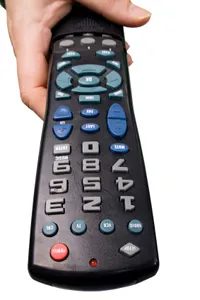
A universal remote control solves this problem. They condensed a mess of five or six separate controllers into one. Of course, it’s usually bigger than a regular remote control, so it won’t easily get lost between the couch cushions. However, they often have a screen that glows in the dark or is backlit. At 2 in the morning you don’t need a flashlight to find the volume button.
What exactly can the device control? Top-of-the-line models can handle almost anything. We’re talking about DVD players, VCRs, CD changers, lasers, amplifiers, game consoles and even computers. Some advanced versions can also interface with lighting controls and air conditioning systems. It’s not just about getting things started. It’s about managing the entire ecosystem.
Most of these devices use infrared signals. If you capture the tip of the remote with your phone’s camera, you’ll see an invisible beam of light. The signals have a short range and require line of sight. Point to the device and press the button. It’s a different matter if there’s a bookshelf in the way. Unless you have a new RF remote, get one.
Understanding Universal Remote Technology
Not all remotes are created equal. In fact, they fall into two distinct groups: multi-brand and learning. Understanding the difference will save you money and headaches.
Multi-brand remote controls available at affordable prices. These are pre-programmed with code for common electronic devices. No need to remember a list of complex codes. You just turn it on and try it. They are simple. They control basic functions like volume and channel switching. In most cases, you can control about four devices at the same time. This is enough for basic settings. This method works if you just want to change the channel and mute the TV. The price is also very cheap. The Sony RM-V310 is a good example. It handles basic functions for seven devices and costs about $15. You can’t go wrong with the price.
Learning remotes are different. It’s more expensive, but smarter. It’s not just based on a list of static code. You can “learn” the functions of the original manufacturer’s remote control. Learn how to use a remote control with an old TV remote control. The new remote control records infrared signals. It replicates every command.
This is important because technology is developing rapidly. New gadgets come out all the time. If you buy a basic multi-brand remote control today, it may not contain the code for the 4K TV you buy next year. A learning remote will. It just learns the new signals. It adapts. It is a truly versatile solution for complex home theater systems.
Some advanced learning remotes also support the “macro” protocol. This means that one button can be programmed to perform multiple commands. Press the button to turn on the TV, change the input to HDMI 2, turn on the soundbar and set the volume to 20. All done! It’s a game-changer for reducing button fatigue.
Additional features and connectivity
If the basic learning remote is still not enough for you, you can upgrade to a newer version. This is where it gets interesting.
Consider the Logitech Harmony 670 for example. Designed specifically for DVR users. Costs range from $65 to $150. Can be programmed via PC. This is a big deal. Programming via a computer is faster and less error prone than typing code on a small remote keyboard. It typically also includes a battery backup feature using flash memory. Changing the battery does not change the programming. Some models also have a charging stand. Dump it in the dock for the night. Always ready.
Next up is the Logitech Harmony 890. This thing costs between one-ninety and four hundred dollars. Why? In addition to infrared radiation, radio frequency (RF) is also used. IR requires line of sight. RF does not. You can send the signal through the cabinet door. You can control your device from another room. Range up to 100 feet. That’s thirty meters. You don’t have to stand in front of the TV to change the channel. You can stay on the couch. Or even in the kitchen.
These advanced models often have an LCD screen. Some even have touchscreen buttons. It’s like a mini command center in your hand. See exactly which devices are active. Take the guesswork out of navigating menus.
What about smartphones? Can your phone replace all of these? Not yet. Companies like Melloware develop apps for iPhones and BlackBerrys that control PC media centers. This is the beginning. But for now, physical remote controls are still the norm in living rooms. They offer tactile feedback. Their batteries don’t run out in 5 minutes. It also doesn’t require a Wi-Fi connection to work.
The choice comes down to your setup. If you have three devices and want to keep things simple, a multi-brand remote is the way to go. If you have a full theater system with DVR, surround sound and multiple sources, a learning remote is a must. If you don’t want to point the remote at the box, spend a little more and get the RF capability.
But which one fits your specific gear? It depends on your brand and the complexity of the wiring. Next, let’s take a closer look at the programming process. No matter how good a remote control is, it’s useless if it can’t communicate with the TV.
Choose the user interface that suits your device
If you’re tired of searching for four different remotes, you’re not alone. The market has changed. It’s not just point and shoot anymore. PC-programmable remotes is a game changer. These aren’t your grandparents’ clickers. Can be connected to a computer via USB or RS-232 serial port. The machine communicates with the remote device and loads all the command codes specific to each device in the stack. It’s precise. It is very fast. No more blindly pushing buttons.
Then came the modern wave of WiFi enabled devices. These completely bypass the cable box. It fetches information from the web and displays sports scores and news headlines on a small LCD screen on the device itself. It’s no longer about controlling the TV, it’s about information at a glance.
For the tactile folks, the LCD Touch Screen remote control offers an illuminated 2 x 4 inch screen. You can customize the “virtual button”. Need a big “power” button? Done. Need a mini keyboard to search Netflix? Sure. If you find the touch screen too slippery or unreliable, choose a model with physical buttons. It’s a matter of taste.
But what if your electronics are hidden? Tucked behind a cabinet? Or maybe in the next room? This is where the RF remote comes into play. Infrared (IR) requires line of sight. This is not the case with RF. The RF remote control sends a signal to an extender in the same room as the TV. The extender then beams an infrared signal to your device. You can control your living room settings from the kitchen wall. No pointing required.
Easy programming
Programming is not magic. It’s just patience. If you do it yourself, this is how you avoid pulling your hair out.
First, install the new batteries in the manufacturer’s original remote control. A weak battery can destroy the infrared signal. You need a strong burst. Also turn off the lights. Fluorescent and incandescent lamps emit their own infrared interference. Darkness helps the universal remote see clearly of the universal remote control.
When copying a command, press and hold a button on the source remote. Don’t click. Wait until the universal remote control confirms reception. Experiment with distance. 4 inches is effective. A foot might work. If that fails, move closer.
Macros: Save time
The real power lies in the macros. This is where the value of a universal remote comes into play. Instead of turning on the TV, receiver and cable box, you can do all three with one button. Press “Watch TV”. Everything wakes up.
Check the macro functions in the user manual. Many developers publish this content online. You can download ready sets or create your own. This is the difference between a simple switch and an intelligent control system.
The price of laziness
You can hire someone to do this. Professional installation companies are available. Program all the buttons and macros until they are perfect. However, remember that it is expensive. If you’re handy, DIY is cheaper. If not, you may end up paying extra for peace of mind.
Weigh the pros and cons
A universal remote control eliminates confusion. They offer glow-in-the-dark buttons. They handle macros. But initial setup can be a nightmare.
Ask yourself what you really need. If you just want to keep it simple, a basic multi-brand remote might be enough. Don’t spend too much money on features you won’t use. Feature overload is real. If you’re scrolling through menus just to find a volume control, you’re buying the wrong tool.
On the other hand, a basic remote control is not enough for a sophisticated home theater. Requires high-end storage capacity. But only if you’ll use it.
Don’t throw away your old ones
Keep the manufacturer’s remote control. Even if you switch to universal. You may need them for certain functions that are not covered by the universal remote control. Or if you lose your new remote, you’ll need the old remote’s code to reprogram everything. Don’t recycle them yet.
How Far Does the Signal Go?
Most universal remotes use infrared and have a range of about 30 feet (9 meters). Obstacles change that. Walls, furniture and people can block the signal. RF models ignore these barriers.
Frequently asked questions
What is the range of a typical universal remote control?
Most universal remotes use infrared signals and usually have a range of about 9 meters depending on the model and obstacles.
How does the universal remote handle multiple commands at the same time?
Advanced universal remote controls can be programmed with a “macro” function that executes a series of commands at the push of a button.
Universal remote control installation location
In the past, televisions, DVD players and sound systems each required their own plastic bar. Currently, most of these devices are integrated into a smartphone or a single universal remote control. This change isn’t just about reducing coffee table clutter. It’s about control.
“The universal remote is dormant in your smartphone.”
John Biggs pointed this out in the New York Times many years ago. This idea is not new. But the implementation is. We went from IR blasters to Wi-Fi, then apps, then back to specialized hardware to fill in the gaps.
The technology behind the magic
Crutchfield’s Ralph Graves explains how these devices can become command centers. They just don’t guess. they learn. Most Universal Remote Controls use infrared (IR) or radio frequency (RF) signals. Some newer models use Wi-Fi or Bluetooth. The key is the code database.
Jennifer DeLeo lists weird Wi-Fi products in PC Magazine. The universal remote control is not strange. They are essential. They connect disparate devices. Televisions can use IR. Soundbars can use Bluetooth. Your streaming box may be using Wi-Fi. A good universal remote control can handles all three.
Travis Larson shows you how to use a universal remotes for TV and DVD in Reader’s Digest. The process is manual. Enter the code. Test the button. Repeat until you get it right. Things don’t always go smoothly. But it works.
Logitech provides an setup tool. The Harmony series supports thousands of devices. Check compatibility online. Then follow the instructions. The app guides you. It’s easier than it looks.
Which universal remote control should I buy?
Michael Pollick asks what to consider. The answer depends on your setup.
- Number of devices : What is the number of controlled devices? Five? Ten? More?
- Protocol : Does your TV use infrared? Does your soundbar use RF? Does your streaming box use Wi-Fi?
- Complexity : Do you need macros? One-button scenes? Or is it just about power and volume?
- Budget : Cheap remotes work for basic setups. Expensive ones work for complex ones.
RemoteCentral.com provides a glossary. Terms like “learning remote” and “pre-programmed” are important. A learning remote copies the signals from your existing remote. A pre-programmed remote uses a database. Both are valid. Neither is perfect.
Tips for learning IR codes
RemoteCentral.com also shares tips for learning infrared codes. The main points are:
- Point the two remote controls towards each other.
- Hold them close.
- Press the button you want to copy.
- Wait for the LED to blink.
- Test the copied function.
Sounds simple. This is usually the case. Sometimes it isn’t. You may have to try several codes. You may need to reset the remote. You may need to call support. This is part of the process.
Why this matters to homeowners
You are decorating. You are building a smart home. Tired of searching for your lost remote control? A universal remote control solves this problem. It’s not just convenient. It’s sanity.
Start small. Get one device working. Then add another. Don’t try to control your entire house from day one. It’s overwhelming. It’s unnecessary.
The technology is here. this