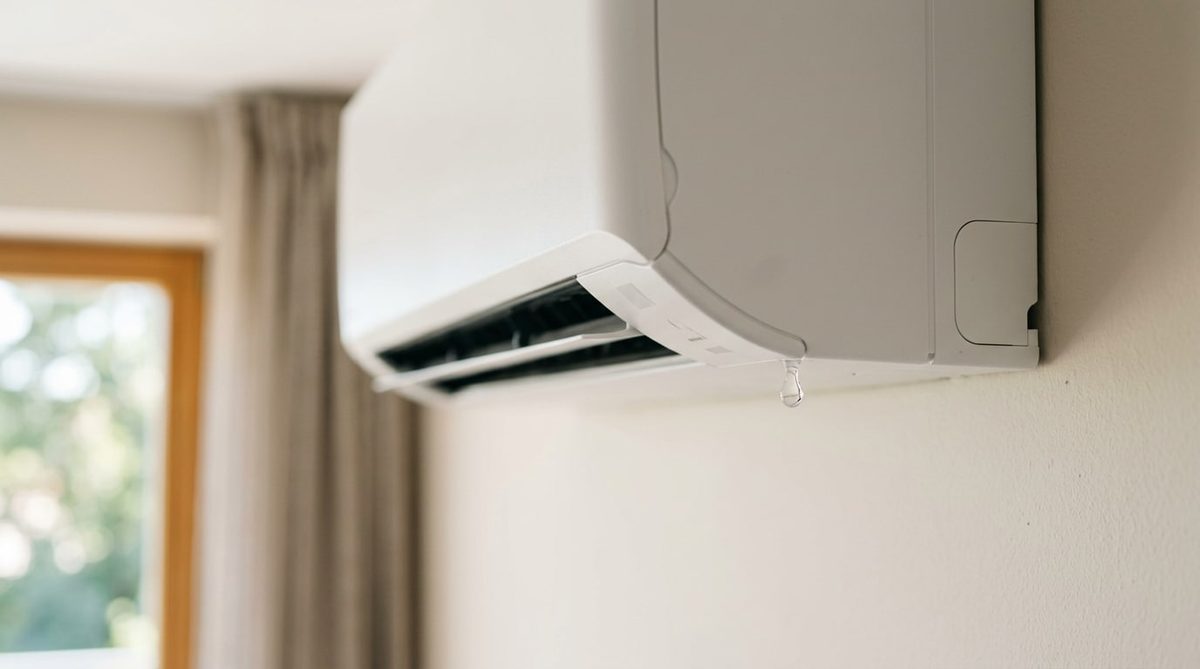
There was a puddle on the wooden floor. Peeling the wallpaper from the seams. A clear and frightening hum caused by a possible electrical short circuit. These are a direct result of your indoor air conditioner starting to leak. It happened in the middle of summer. The temperature has risen. The devices run at full speed to withstand the heat. Then water started to drip.
The immediate reaction was panic. You imagine an expensive specialist visit. Imagine dismantling a wall unit with a complete toolbox. They are afraid to pay the price.
This is a reality check. The mechanisms of these devices follow a strict logic. Usually does not require an expert. Common household problems, such as a squeaky door or a dripping faucet, can be solved with simple logic and basic tools. Air conditioners are no exception. Precise gestures will solve your problems instantly. This solution is based on a highly effective triangle of cleaning filters, unclogging the condensate drain, and checking the evacuation slope.
Clears clogged filters and prevents most leaks
Successful maintenance is often hidden. Before removing the front of the indoor unit, look at the lungs of the machine. These are filter grates.
*These elements continuously trap dust, pet hair and airborne particles. *
In summer, the unit constantly sucks in large amounts of air. Inadequate filtration prevents the hot surrounding air from circulating properly. The evaporator coil eventually freezes. If the air conditioner shuts off or you attempt a defrost cycle, large amounts of ice can form and melt quickly. The lower collecting tray was completely submerged. This causes an immediate leak into your living room.
Carefully remove the plastic cover to preserve the integrity of the system. Wash with clean, lukewarm water. It must be completely air-dried before changing. This simple inspection can prevent unnecessary damage to your floors.
Simple techniques for cleaning the condensate drain line
If the filter is clean, but there are still water droplets, the cause is deep in the circuit. The small condensate drain pipe has only one function. It removes condensation from the air and drains it out of your home.
Such sticky mixtures eventually cannot be properly drained into the pipe after many years of use. It goes back into the tray. Almsgiving can inevitably spread to people’s homes.
Restore the flow by attacking the pipe. One particularly quick way is to place the pipe outlet outwards. Make sure the connection to the end of the pipe is airtight. Alternatively, when the road passes, you can use a small amount of very hot water to unclog the room.
Evacuation slope adjustment: final confirmation
Removing dust and unclogging the ducts is an important step. They are not used if the condensate flows passively under its own weight.
If a pipe in the wall becomes attached to the drain during cleaning or becomes attached over time, only a reverse slope, sufficient to bind the liquid, can affect the natural path of the water. There must be a continuous landing towards a foreign country. There are no spiral loops. There are no long flat sections.
If the walls are not horizontal, simply adjusting the top stand to point the drain in the direction of discharge will ensure optimal operation during the soon-to-be-started heat removal cycle.
You don’t need high-tech equipment to fix a water leak in your air conditioner. Just act consciously. Make sure the filtration system is clean. Make sure drains are clean and clear. Make sure the tilt is correct. This device reinforced the original function without destroying the wall.
The next time you hear a suspicious sound or experience a minor malfunction in your home, do you hesitate to consider a mechanical problem before calling an expensive technician?
The water is still dripping. Summer has just begun.