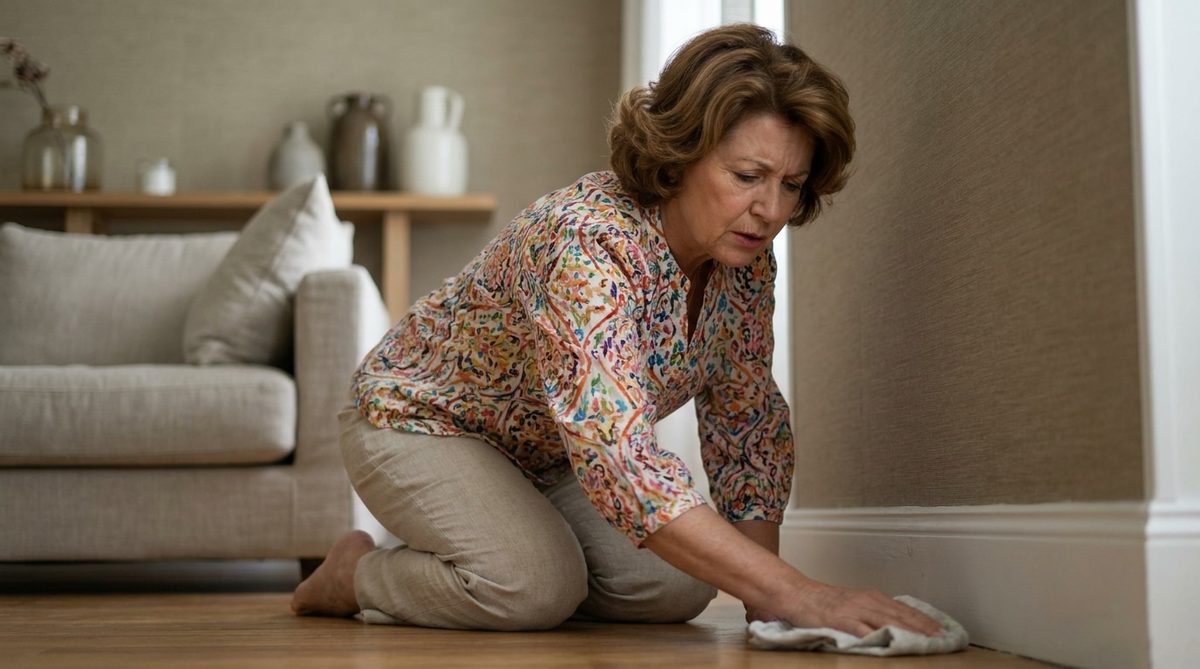
Clean homes have one universal weak point. It’s rarely the floors or the countertops. It’s the baseboards. Specifically, the thin gray line that reappears at the floor level within days of cleaning. You see it first in the entryway. Then the hallway. Then behind the furniture.
The frustration is real. You scrub hard. You get on your hands and knees. And still, the dust returns. It feels magnetic.
There is a better way. It comes from hotel housekeeping standards. The trick isn’t to scrub harder. It’s to change the surface. You make it so particles simply don’t want to stick.
Why Baseboards Become Dust Magnets
Baseboards accumulate everything dust loves. They are low visibility zones. You rarely prioritize them during a quick tidy. They sit right in the path of air currents.
Every time someone walks by, shoes lift micro-debris. Textiles release fibers. Air movement does the rest. Moving a chair can suspend settled dust again. Since baseboards run along walls, they act as natural collection points. This is especially true in high-traffic living areas.
White or satin finishes make the problem worse. Any trace contrasts sharply. You get the illusion of permanent dirt. Even if the rest of the room looks spotless.
Static electricity is the real culprit. Paints, plastics, and varnished wood hold charges. Think of an old TV screen. It pulls dust like a magnet. Add variable humidity. Radiator heat. Drafts near windows. The dust settles in thin layers. It clumps together over time.
Wait too long, and it mixes with kitchen grease or bathroom splashes. Cleaning becomes a nightmare. You need a method that reduces adhesion from the start. Not just removal.
The Hotel Secret: Dryer Sheets on Baseboards
Here is the twist. It sounds too simple to work. But it does.
After cleaning your baseboards, wipe them down with a dryer sheet. Yes, the kind you use in the laundry. These sheets are designed to reduce static cling. They leave a microscopic film. This film lowers friction.
On baseboards, the goal is identical. Less static charge means fewer particles sticking. The process takes seconds. It requires no special tools. It fits easily into a routine.
It isn’t a miracle cure. It doesn’t replace cleaning. But it is a genuine shortcut. You get cleaner baseboards for weeks. You stop chasing the gray line every few days.
The effort-to-result ratio is high. The difference is most noticeable in exposed areas like entries and living rooms. You see less frequent returns of the dusty veil. The sheet also glides well. It catches stray particles in corners you might miss with a rag.
Be careful with materials. On raw, porous, or fragile wood, test in a hidden spot first. You want a clean finish. Not streaks or residue.
How to Apply the Dryer Sheet Method
For this to work, you must start with a clean surface. The sheet is a finish. Not a cleaner.
First, dust. Then degrease if needed. This is vital near kitchens or high-traffic paths. Ensure the baseboards are completely dry. Then apply the sheet.
Think of it as a shield. In summer, with open windows and circulating air, this step is crucial. It limits rapid deposits from outside dust and shedding textiles. The aim is a discreet anti-static layer. Not a saturated surface.
Follow this simple protocol:
- Dry dust first. Use a microfiber cloth or an vacuum brush attachment. Remove the bulk.
- Clean if necessary. Use a slightly damp microfiber cloth. Dry thoroughly.
- Apply the dryer sheet. Use long, steady strokes. Do not press hard.
- Target critical zones. Focus on entry doors, under tables, and near radiators.
- Refresh only when needed. Wait until the dust veil is obvious. Don’t do it weekly by habit.
One sheet covers several meters of baseboard. Stay light. If the surface feels slippery or marks easily, you are pressing too hard. Avoid repeated passes in the same spot.
With the right amount, the effect is clean. No overpowering scents. The next cleaning becomes faster. Dust lifts off easily because it isn’t baked on.
Why do we accept the daily battle against baseboard dust? We don’t have to. The solution is already in your laundry basket.
Stop letting dusty baseboards ruin the look of your freshly cleaned rooms. It’s not about scrubbing harder. It’s about changing how you finish the job.
Most people miss the mark here. They wipe the baseboard. They move on. But that’s where the mistake happens. You need to lock in that clean look. You need to stop the dust from sticking in the first place.
Here is how you mess it up. And here is how you fix it.
The Chemistry of Dust
Dust isn’t just dirt. It’s static. It’s charged particles looking for a place to land. Your goal isn’t just removal. It’s neutralization.
If you wipe a baseboard while it is still damp, you leave streaks. The moisture traps particles. You create a sticky surface that screams “dust magnet.” Let it dry completely. Then hit it with the right tool.
Don’t test this on everything blindly. Some older homes have fragile, matte paints. They can peel or cloud up if you use the wrong chemical approach. Test a small spot first. If it feels tacky, you’ve gone too far.
Stop Boosting the Shine
Here is a common trap. You want the baseboard to look “cleaner.” So you use a glossy spray. Or a greasy polish.
It looks shiny for five minutes. Then it grabs every fiber, hair, and speck of lint in the air. Grease holds dust. Water beads off dust. Shine attracts dust.
You want the opposite of shine. You want a matte, static-free finish.
The best duo is simple. Cleanliness plus a light anti-static agent. Nothing heavy. Nothing oily. Just enough to break the charge so the dust slides off rather than sticking.
Cleanliness + light anti-static. No unnecessary coating.
This routine is durable. It works because it fights physics, not just grime.
Extend the Effect Room to Room
You can’t just clean the baseboard in isolation. The rest of the house feeds the problem.
The Entryway
This is the front line. If your entryway is dirty, your baseboards are doomed.
– Use a heavy-duty doormat.
– Shake out rugs outside.
– Wipe shoes before they hit the floor.
This simple habit reduces the amount of “imported” dust by half. You stop the problem at the door.
The Living Area
Chairs and small furniture sit close to baseboards. When you push them back in, you create turbulence. You kick up settled dust. That dust settles right back onto the clean line you just wiped.
Move the furniture gently. Clean underneath it if you can. If you can’t, at least wipe the wall behind it.
The Vacuum Hack
Run your vacuum along the wall line. Use the brush attachment. Do this quickly. Even if you don’t get every particle, you reduce the bulk. Less bulk on the floor means less on the baseboard later.
The Dryer Sheet Trick
You’ve heard of it. You’ve probably laughed at it.
But it works.
Take a dryer sheet. The kind you use in the laundry. Run it along the baseboard.
It deposits a tiny layer of fabric softener chemicals. These chemicals are anti-static. They neutralize the charge on the surface. Dust can’t stick to a non-charged surface.
It’s fast. It’s cheap. It’s effective.
The baseboard stops being the annoying detail that ruins your clean