You probably don’t imagine coal when you hear the phrase “green building material.” Coal is dirty. It pollutes the air. It pumps greenhouse gases into the atmosphere. It is rarely considered an eco-friendly choice for construction. Yet, there is an ironic twist in the story of modern concrete. The very waste product of coal burning is now being used to create a material that could help lower carbon emissions in the construction sector. That material is fly ash concrete.
What is Fly Ash Anyway?
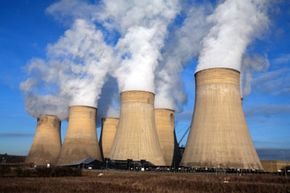
Most of the electricity in the United States comes from coal-fired power plants. The coal gets ground into a fine powder. It is burned at extreme temperatures in a boiler. The heat creates steam. The steam spins turbines. That is how we get power. It is a dirty process. Modern plants have pollution-control equipment to stop particulate matter from exiting the smokestacks. When that equipment is cleaned, we are left with coal ash.
Fly ash is one of the most abundant industrial byproducts on Earth. Power companies are required by environmental laws to trap and dispose of it properly. But disposal is a headache. The volume is massive. The ash contains heavy metals. It can be dangerous. Coal plants in the U.S. do not have the cleanest track record for handling this waste. Several major spills have been reported in recent years.
The Clever Idea to Recycle
The construction industry had a clever idea. Start making concrete out of fly ash. Substitute fly ash for Portland cement. Portland cement is the primary ingredient in most concrete. Fly ash has characteristics that make it a good candidate. It offers strength. It provides durability. It is cheap. And because it is recycled, it stops concrete companies from mining for new raw materials.
It seems like a win for everyone. But there are concerns. People worry about the safety of living surrounded by fly ash. Coal is full of harmful substances. There are questions about whether heavy metals could leach out of concrete made with coal ash. Builders worry about lawsuits. They worry about insurance coverage.
The Heavy Metal Problem
Coal ash is a cocktail of toxic chemicals. It contains heavy metals found in coal, but in higher concentrations. Fly ash typically contains arsenic, lead, and selenium. These substances are known to cause cancer and other health problems. Environmentalists have long fought to have fly ash categorized as a hazardous material. They have faced stiff resistance. From the energy industry. From the construction industry.
Storing and safely disposing of fly ash is a major challenge. It is usually mixed with water and stored in ash ponds. These ponds are exposed to storms. They can cause spills. There are currently about 600 coal ash sites in 35 states across the country. Many have experienced spills recently.
The biggest fly ash spill in U.S. history took place in 2008. It happened at the Kingston Fossil Plant. That plant is about 40 miles west of Knoxville, Tennessee. About a billion gallons of fly ash sludge and water were released. It was an environmental catastrophe. It spread to the surrounding land and waterways.
Is It Safe to Build With It?
One potential solution to the storage problem is to use fly ash as a building material. When used in concrete, fly ash is generally believed to be fairly safe. Although it often contains known carcinogens, the harmful effects are thought to be neutralized when fly ash is added to concrete mixes. But the long-term performance is still being watched. The leaching question remains. The legal risks persist.
“Fly ash concrete looks like a winner, but there are still some lingering concerns about the safety of surrounding ourselves with too much fly ash.”
We still do not know exactly how it performs over decades. The heavy metals are locked in, theoretically. But theory is not always reality. The debate continues. The waste problem is partially solved. But is it fully?
The Chemistry Behind the Mix
Let’s skip the academic lecture and look at what actually happens inside the drum. We often hear that fly ash replaces Portland cement, but do you know what Portland cement really is? It’s the ubiquitous backbone of modern construction. The recipe? Mostly lime and silica, with some aluminum and iron tossed in. To make it, you grind up limestone, chalk, shells, clay, shale, and sand. Then you bake it. It takes a massive amount of energy and resources to produce, which is exactly why the construction industry is looking for alternatives.
When you introduce fly ash into the mix, it isn’t just sitting there as inert filler. It’s active.
Geopolymer concrete is the technical term for concrete made from synthetic aluminosilicate materials. Fly ash is rich in alumina and silicate. When it meets the alkaline solutions in Portland cement, a chemical reaction occurs. It produces a binding aluminosilicate gel that becomes part of the concrete’s matrix. This isn’t a weak substitute. It’s a robust replacement for ordinary Portland cement.
How Much Fly Ash Can You Use?
Current industry standards vary, but you’ll commonly see concrete mixes where up to 25 percent of the cement is swapped for fly ash. Some manufacturers are pushing that to 50 percent.
There is a catch, though. Higher concentrations of fly ash require more rigorous testing. The results can be unpredictable if you don’t dial in the mix correctly. From a builder’s perspective, performance is the only metric that matters. And in that department, fly ash concrete delivers.
Changing the composition of the concrete adds strength. The resulting material is less porous than standard Portland cement. That means it’s more resistant to corrosion and premature deterioration. It’s also more acid-resistant and fire-resistant. In terms of raw power, fly ash concrete demonstrates higher compressive strength and tensile (stretching) strength.
Why It’s a Green Paradox
Fly ash comes from coal-fired power plants. These are among the largest sources of air pollution and carbon dioxide emissions on the planet. So how is a waste product from a polluter considered a green material?
Simple. Recycling.
If power companies are going to burn coal and produce fly ash anyway, you might as well put it to good use. It saves money. It saves energy. And it keeps waste out of landfills.
Making cement from scratch is energy-intensive. Conservative estimates suggest concrete production accounts for 5 to 8 percent of global greenhouse gas emissions. That number could be higher. We currently produce over 2.6 billion tons of Portland cement annually. As populations grow, that number will rise unless a greener option emerges.
Fly ash concrete offers a solution. It curbs global carbon emissions while building infrastructure that lasts longer. You won’t have to rebuild as often. One study even found that fly ash bricks can store carbon dioxide from the environment, adding another layer of environmental benefit.
The LEED Credit and Long-Term Impact
The U.S. Green Building Council agrees. Leadership in Energy and Environmental Design (LEED) credits the substitution of fly ash concrete for at least 40 percent of ordinary Portland cement.
A life-cycle assessment—looking at every stage from production to demolition—shows that replacing ordinary Portland cement with fly ash concrete can decrease carbon emissions by as much as 90 percent. The math is straightforward. Fly ash is recycled. Using it prevents the carbon dioxide emissions associated with manufacturing new cement. And because the concrete is more durable, it doesn’t need to be torn up and replaced as frequently.
The infrastructure you build today lasts longer. The carbon footprint shrinks. It’s not just a material choice. It’s a strategy. But will the supply chain keep up? And can small DIYers replicate this at scale without a lab on site? That’s the next hurdle.
The Heavy Metal Question in Concrete
Fly ash is essentially pulverized coal residue. Coal contains heavy metals and toxins. So, logically, you might worry about living inside a wall made of coal dust. It sounds risky. And for a while, the industry had to prove it wasn’t.
The tension peaked in late 2008. A dike burst at the Tennessee Valley Authority’s Kingston Fossil Plant. Over 5.4 million cubic yards of sludge spilled out. It covered 300 acres. The news cycle was brutal. A smaller spill hit Alabama weeks later. The media kept the story alive. The EPA took notice. Activists demanded stricter rules.
This brings us to the core safety concern for DIYers and homeowners: is fly ash concrete safe for residential use?
The Environmental Protection Agency has debated classifying fly ash as hazardous waste. They have stated that such a label would not technically apply to fly ash already mixed into concrete. But the construction sector remains skeptical. A stigma is hard to shake. Even if the concrete is chemically inert, the perception of risk lingers.
Leaching and Chemical Stability
Geopolymer concrete, a type that relies heavily on fly ash, has been shown to leach arsenic, chromium, and selenium. These are toxic elements. You don’t want them in your basement floor.
However, the chemistry isn’t static. Research indicates that adding calcium can significantly reduce the leachability of these heavy metals. It creates a more stable matrix. But long-term data is still incomplete. What happens when the concrete degrades over fifty years? What happens when it eventually ends up in a landfill? The answers are still being studied.
The Legal Stigma
The concrete industry fears a regulatory misstep more than a chemical one. They worry about a “hybrid law.” This would classify stored fly ash as hazardous while leaving the finished concrete in a gray area. The risk is social and legal, not just physical.
If fly ash is tagged with hazardous waste labels, it risks being stigmatized like asbestos or lead paint. That reputation is deadly to the market. It could make construction companies vulnerable to lawsuits. Even if the science says it’s safe, the liability risk is real.
The Kingston Spill Details
For context on the scale of the controversy, look at the 2008 Kingston spill. The dike failure released massive volumes of sludge. It wasn’t just dirt. It was wet coal byproduct. The Tennessee Department of Environment and Conservation and the EPA have been cleaning up the affected water and land for years. It’s a messy, expensive, and ongoing process.
The spill didn’t just clean up the environment. It cleaned up the public’s trust in fly ash as a building material. Or at least, it cracked it.
Now, imagine applying that same material to your home renovation project. You are using a byproduct of power generation. It’s cheap. It’s eco-friendly in terms of waste reduction. But you are also integrating a material with a controversial past.
The question isn’t just about chemical bonds. It’s about perception. It’s about whether the concrete industry can manage the narrative. And whether homeowners are willing to overlook the coal origin when the final product looks like standard gray concrete.
Some say the benefits outweigh the risks. Others say the uncertainty is too high. The regulatory landscape is shifting. The science is evolving. But the concrete? It stays put.