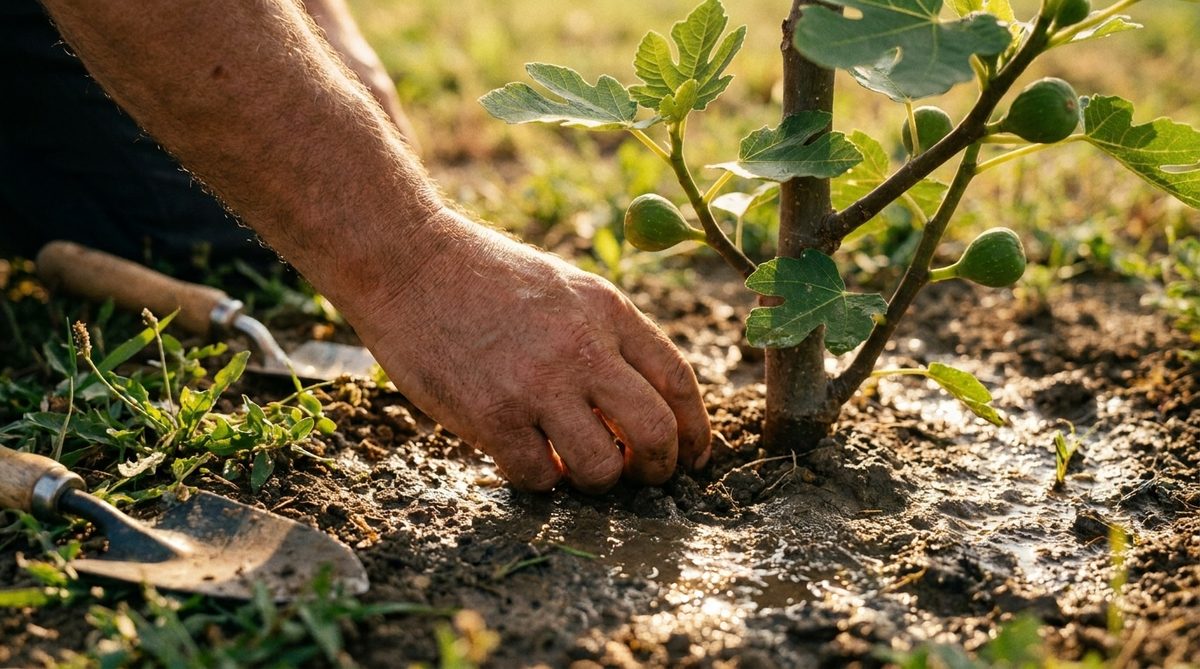
When the first heatwave hits, your instinct is probably to grab the hose. The thermometer spikes, the sun beats down, and panic sets in. You see a Mediterranean tree—maybe a fig—and you think it’s dying. So you douse it. You give it everything.
And then the leaves turn yellow. They drop.
It feels like a betrayal. You are trying to save it, so why is it failing? The answer isn’t in the air above the canopy. It’s right there, just beneath the surface, hidden by mulch or soil.
The “Piscina” Mistake: Why Constant Watering Drowns Roots
In the face of extreme heat, flooding the base of a tree feels like the only logical move. We think more water equals more survival. But plant biology doesn’t work on human logic.
When you turn the base of a fig tree into a swamp, you kill porosity. The soil structure collapses. It stops draining. It stops breathing.
Too much water is often more fatal than temporary drought.
You are creating a stagnant pool. The earth loses its ability to let air reach the roots. Instead of cooling the plant, you’re suffocating it in a sterile, waterlogged environment. This is a common mistake for gardeners who frequent big-box stores like Leroy Merlin or Jardiland, assuming that daily attention equals care. It doesn’t.
The Discovery Under the Mulch: Asphyxiated Roots
Dig down a few inches into your mulch or soil. What do you find?
If you’ve been overwatering, you won’t find fresh, loose dirt. You’ll find compacted mud. It will likely smell bad. This is the disaster zone.
The leaves are falling because the roots are drowning. They can’t respire. Without oxygen, the root system begins to rot. It stops pumping nutrients. The tree suffers a paradoxical thirst—it’s surrounded by water but can’t drink any of it.
The tree is essentially choking. The yellowing leaves are a distress signal, not a plea for more water.
How to Fix Irrigation: Deep, Infrequent Watering
Stop immediately.
Cut off the water for a few days. Let the top layer of the soil dry out. You need to restore gas exchange in the ground. You need oxygen back in the root zone.
Once the surface is dry, change your strategy. Switch to deep, generous watering, but space it out.
- Frequency: Once a week is plenty, even in peak summer.
- Volume: 10 to 15 liters applied slowly.
- Goal: Force the roots to dig deeper.
When you water deeply and rarely, the tree is forced to send its roots down into cooler, moister soil layers. This makes it resilient. It becomes autonomous. It can handle the next heatwave without panic.
Shallow watering keeps roots near the surface, where they bake and die. Deep watering builds a foundation.
Conclusion
The mistake is visible. The cure is counterintuitive.
Most gardeners overwater during stress. They think they are helping. They are actually harming. By observing the soil and respecting the plant’s need for air, you can reverse the damage. The foliage will return. The tree will recover.
Have you ever checked under the mulch of your stressed plants? Or are you just waiting for the leaves to fall?