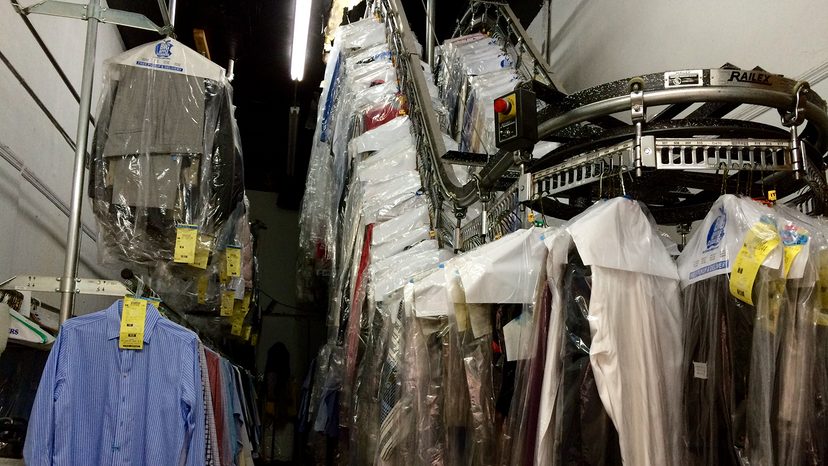
Your washing machine relies on water. It’s the universal solvent. It gets most things out. But wool? Wool hates water. Shrinkage happens. Colors bleed. And some stains just refuse to budge in H2O. That is where the dry cleaning industry steps in.
The name is a lie. It isn’t dry. It’s wet. Just not with water.
The Chemical Solvent Shift
Early dry cleaners used kerosene. It worked. It also burned down shops. Fire hazards were a real problem.
After World War II, the industry switched to perchloroethylene, also known as perc. It became the standard. It cuts through grease better than soap and water ever could. The process is a cycle. Clothes go in. Solvent washes them. Then an extractor spins out the chemical. The solvent is recovered. It is reused. The clothes are pressed. Wrinkles vanish.
“Dry cleaning employs chemical solvents that remove dirt and grease and eliminate stains.”
The Health and Environmental Cost
Perc works too well. It stays in fabrics. It evaporates into the air. Workers breathe it. Neighbors breathe it.
The EPA flagged the risks. In 2020, the agency phased out perc in residential buildings. You cannot have a dry cleaner in the same structure as apartments. California is taking it further. They are phasing out the use altogether.
Perc is still widely used in many places. But the shift is happening. Greener solvents are emerging. They reduce risk for workers and customers.
Wet Cleaning: The Water Alternative
Some people want to avoid chemicals entirely. Enter wet cleaning. It sounds like an oxymoron. It isn’t.
Wet cleaning uses water. It uses biodegradable detergents. The key is the machine. These are not your home washer. They are computer-controlled. They monitor temperature and agitation with precision. They protect delicate fibers. Water-based cleaning mimics dry cleaning results without the toxic solvents.
The EPA and environmental groups advocate for this method. It is safer for the land. It is safer for the water. It is safer for the air.
How Dry Cleaning Works Step-by-Step
- Inspection: Garments are checked for stains and damage.
- Pre-treatment: Stubborn spots are treated before the main wash.
- Cleaning: Clothes are tumbled in a solvent like perc or a green alternative.
- Extraction: An extractor removes the solvent. The chemical is recycled.
- Drying & Pressing: Heat removes residual moisture. Pressing restores the shape.
Why Dry Cleaning Beats Home Washing for Certain Stains
Standard detergent struggles with oil. It struggles with grease. These hydrophobic stains repel water. They need a hydrophobic solvent. Perc and similar chemicals dissolve these oils instantly. If you try to wash a grease stain with soap and water, it often sets deeper into the fibers. Dry cleaning lifts it out.
Is Dry Cleaning Harmful to Your Health?
Experts link perc to various health risks. It can leak. It can spread to land and water. It can drift into the air.
Modern facilities have ventilation systems. They are designed to handle the process. The recovery process is thorough. Solvents are captured. They do not just evaporate into your living room. But the risk is not zero. This is why regulations are tightening.
Which Method Is Better for Your Clothes?
It depends on the fabric and the stain.
- Water-based cleaning is best for durable fabrics and when environmental impact is a priority.
- Dry cleaning is superior for delicate structures like wool suits or silk dresses. It also handles heavy oil stains that home machines cannot touch.
Home washing is convenient. It is cheap. But it has limits. Some materials simply cannot survive the agitation and water of a standard cycle. Dry cleaning offers a specialized environment. It uses chemistry to achieve results that water cannot.
The industry is changing. The move away from perc is real. Wet cleaning is growing. But the core concept remains the same. Use the right tool for the job. If your clothes are delicate or heavily soiled with oil, the home machine might not be enough. You need the solvents. You need the precision.